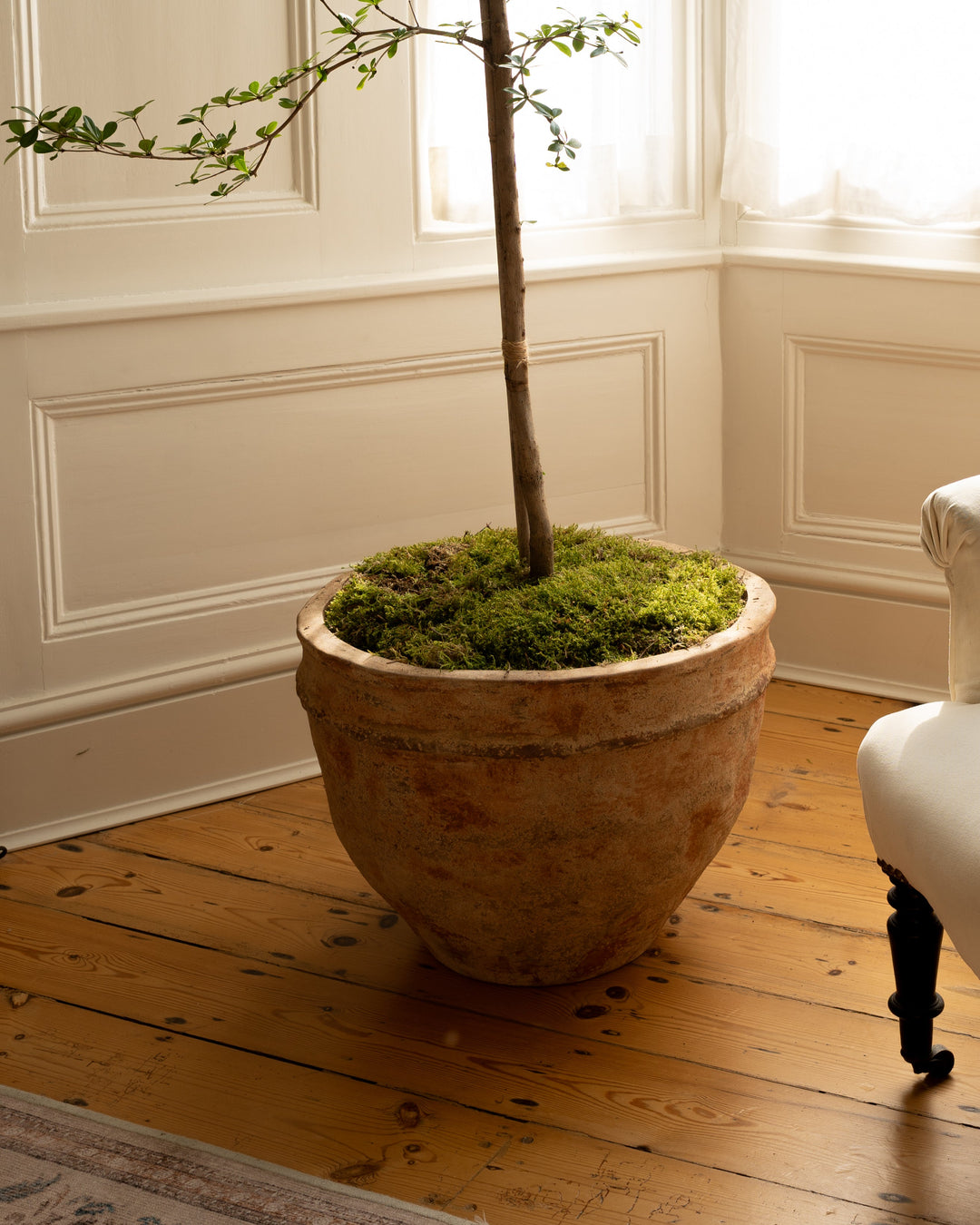
Japanese maples are the most refined small trees you can grow in Britain — layered, sculptural, and capable of autumn colour that stops people on the pavement. This guide covers both our deep-purple 'Bloodgood' and our green-leaved forms; their needs are the same, with one difference in siting noted below.
Position
Dappled shade or morning sun, with shelter from two enemies: cold or drying wind, and hot afternoon sun. Both scorch the fine leaves — crisped brown edges in July are almost always wind or afternoon sun, not disease. A sheltered courtyard, a spot with taller planting around it, or the east side of the house is ideal. The one nuance: purple-leaved 'Bloodgood' holds its colour best with a few hours of sun, while green-leaved forms stay freshest in more shade.
Soil and watering
Moist but free-draining, neutral to slightly acid soil. In pots — where acers genuinely thrive for years — water steadily through the growing season and never let the rootball dry right out; a drought-stressed acer shows it in scorched foliage within days. Mulch plants in the ground each spring to hold moisture at the roots.
Feeding
Go gently. A light feed in spring is all an acer wants; overfeeding produces soft, oversized growth that scorches and spoils the tree's naturally tiered shape.
Pruning
The best pruning is almost none. Remove dead, crossing or wayward branches only, and only in full dormancy — November to January — because acers bleed sap if cut in spring. The elegant shape develops on its own; every unnecessary cut sets it back.
In pots
Use a loam-based compost with added grit, in a pot only modestly larger than the rootball, and shade the pot itself from baking sun so the roots stay cool. In a hard freeze, potted acers appreciate the pot being wrapped or moved against the house wall — the roots are less hardy than the branches.
Good to know
Autumn colour is the payoff for good siting: sheltered, evenly-watered trees colour longest and brightest. Leaf drop happens fast once it turns — enjoy the week, and know the bare winter silhouette is half the reason the Japanese have prized these trees for centuries.