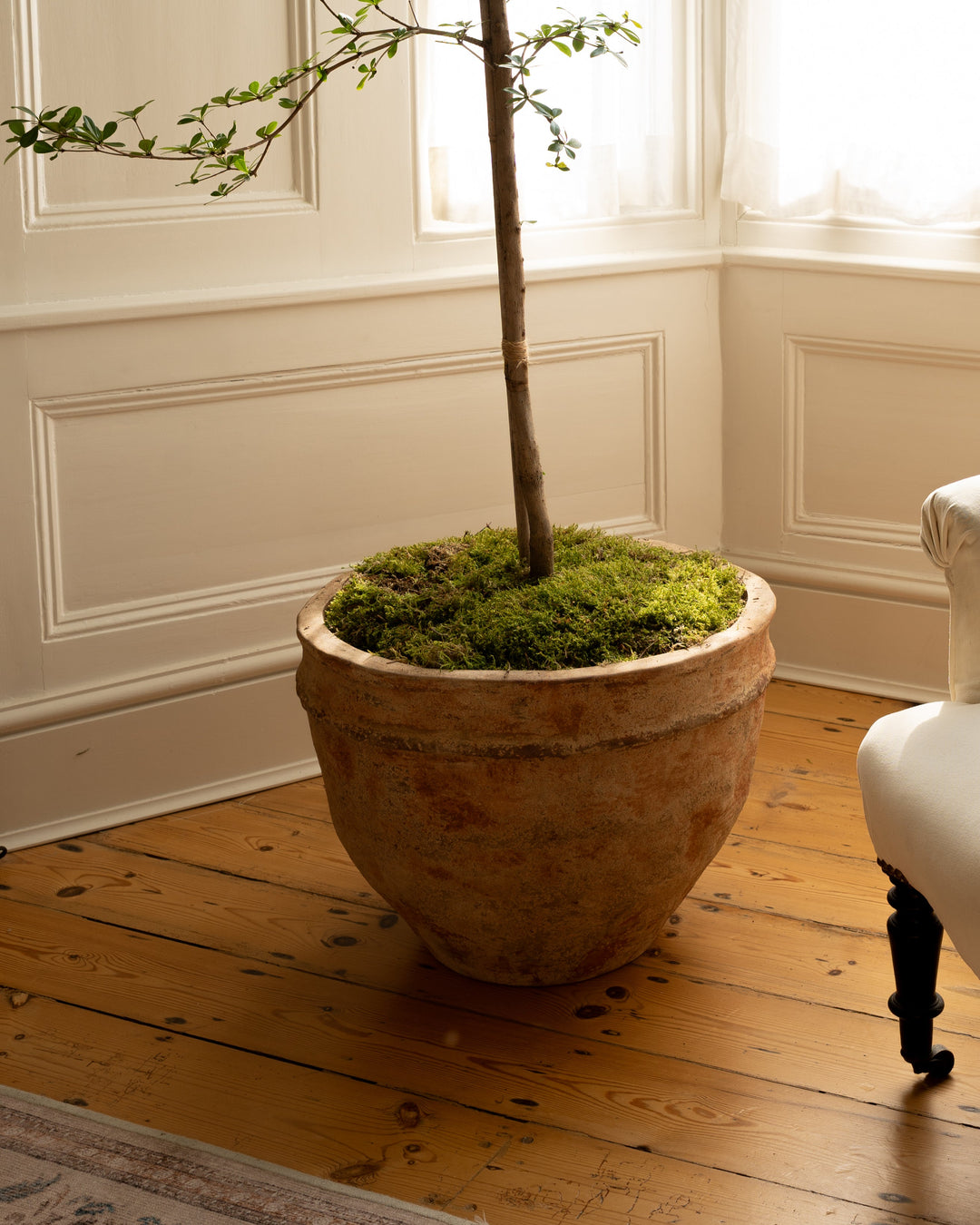
Plants and Pets: An Honest Guide
Every plant on our site carries one of three pet-safety labels: Completely pet-safe, Mildly irritating if chewed, or Toxic if ingested — keep out of reach. Most plant shops stop at a binary safe/unsafe warning, which manages to be both alarming and unhelpful. Here's what our labels actually mean, and how to choose for the animal you actually live with.
What "toxic" really means
Almost no houseplant is dangerous to a pet that shares a room with it. The risk comes from eating the plant — and for the overwhelming majority of species we sell, even that ends in mouth irritation or a brief upset stomach rather than anything worse. Many of Britain's most-loved houseplants — the Swiss Cheese plant, the fiddle-leaf fig, the snake plant — fall into this category: their leaves make chewing unpleasant almost immediately, which is precisely why animals rarely persist.
The genuinely dangerous plants form a short and specific list — true lilies are the most serious for cats — and we don't sell them.
Match the plant to the animal, not the label
Risk lives in behaviour, not just botany. A twelve-week-old kitten and an elderly labrador are different animals in every sense: young pets explore with their mouths; older pets almost never trouble a plant they've lived alongside for years. Placement does quiet work too — a plant at 1.8 metres, on a plinth, or in a hanging planter is out of the conversation entirely for most pets.
Our honest guidance: with a young or known nibbler, choose from the pet-safe tier below — there's no shortage of statement plants in it. With a settled adult animal, the middle tier is a sensible choice most pet-owning plant lovers happily make, exactly as they always have. The small toxic tier — in our range the bay tree, lemon tree, wisteria and desert cactus — simply wants siting where browsing isn't an option.
Pet Safe
View all


Fine with Settled Pets
View all


If a plant does get chewed
Remove the plant material, offer water, and watch. Drooling or mouth-pawing after chewing an irritant plant usually settles within the hour. If your pet is repeatedly sick, lethargic, off its food, or you suspect it ate something from the toxic tier, call your vet and take a photo of the plant with you. UK pet owners can also call the Animal PoisonLine - 01202 509000.
Where our labels come from
We grade every species against the ASPCA's toxic and non-toxic plant database, cross-checked with the Dogs Trust poisonous plants list and Cats Protection's dangerous plants guidance. Where a plant's identity or the evidence is ambiguous, we don't guess — we leave the label off until we're sure. You'll find the label on every plant's page.

By Dom Butler, Founder & Horticulturalist at Plant Drop · Updated July 2026
More guides
View all