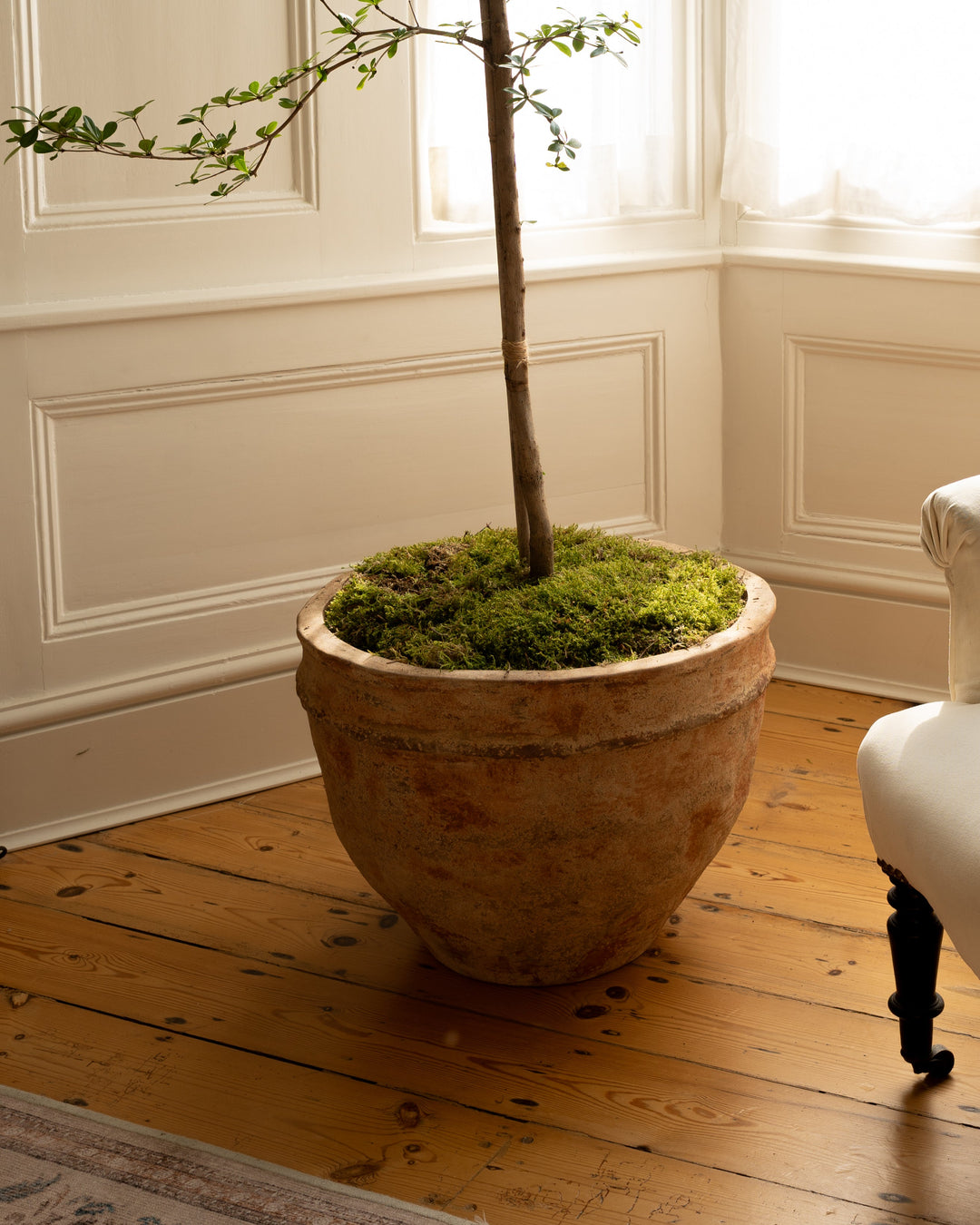
Despite the name it's sold under, the Golden Jasmine isn't a jasmine at all — it's a Radermachera, an elegant fast-growing tree with layered, glossy, fern-like foliage that reads as fresh and light where most indoor trees read as heavy. It's also one of the friendliest large plants for a home with pets.
Light
Bright indirect light suits it best — near an east- or west-facing window, or set back from a south-facing one. Gentle morning sun is welcome; hot midday sun through glass is not. In too little light it grows leggy and sheds inner leaves, so give it one of your brighter spots.
Watering
Keep the soil lightly, evenly moist — water when the top two to three centimetres feel dry, which usually means weekly in summer and every ten days or so in winter. Unlike a ZZ or a cactus, it doesn't enjoy drying out completely: a properly parched Radermachera drops leaflets in protest. Good drainage matters just as much; never leave it standing in water.
Temperature
Comfortable at 16–24°C and best kept above 10°C. It dislikes cold draughts and sudden moves — position it away from frequently-opened doors and radiators, and expect a little leaf drop while it settles into a new home. That's adjustment, not decline.
Feeding
This is a genuinely fast grower in good light, and it appreciates the fuel: feed monthly with a balanced liquid fertiliser from spring to early autumn.
Shaping
Pinch out the growing tips in spring if you want a fuller, more compact head — it responds quickly and branches willingly.
Keeping an eye out for pests
Soft, fine foliage like this is more appealing to sap-suckers than the leathery leaves of a rubber plant or fiddle-leaf fig, and the Radermachera's main visitor is mealybug — small white cottony specks tucked into leaf joints and along stems. Scale and red spider mite turn up occasionally too, particularly in dry, heated rooms over winter. The early signs are worth knowing: cottony white dots where leaflets meet the stem, a sticky film on the leaves or the floor beneath, fine webbing between leaflets, or leaves that look dull and faintly speckled.
Caught early it is a small job. Wipe the affected areas with a cloth dipped in mild soapy water, or dab individual mealybugs with a cotton bud dipped in surgical spirit, then treat the whole plant — undersides of leaves included — with an insecticidal soap or neem-based spray. Repeat weekly for three weeks, which catches the next generation as it hatches; a single treatment rarely finishes the job.
Prevention is mostly routine. Give the leaves a wipe when you dust — spider mite in particular dislikes being disturbed — keep humidity up through the heating season, isolate any new plant for a fortnight before it joins the others, and have a proper look at the leaf joints each time you water. If you spot something and aren't sure what it is, send a photo through our plant clinic and one of our horticulturalists will identify it and tell you what to do.
Good to know
Radermachera is non-toxic, making it one of the few statement trees you can place confidently in a home with cats or dogs. Glossy leaves that lose their shine usually just want a rinse or a wipe — dust builds up quickly on foliage this fine.