The Best Architectural Indoor Plants for Modern Interiors
Architectural indoor plants are large, sculptural plants that add structure and height to a room. Rather than filling a space with many small plants, designers often use one or two large plants to create impact.
In open plan homes and minimalist spaces, one truly statement piece can have more visual impact than many small pieces. This is also true of large open offices with ceilings of 2.5m or higher. Choosing a large plant when there are high ceilings gives interest at eye level and across the room, giving interest from many viewpoints and desks rather than for the person sat next to it.
What makes a plant architectural?
• Strong vertical shape
• Large sculptural leaves
• Height that fills a corner or can be seen from across a room
• Simple silhouette that complements modern interiors
Our go-to architectural indoor plants
A curation of plants we recommend to bring structure and impact to a space.
Bird of Paradise
Strelitzia Nicolai

The Bird of Paradise has tall dramatic leaves that fan out from strong green stems. These tropical plants have a sculptural look and work incredibly well in bright rooms.
Our specimens have at least 4 tufts per plant meaning they are very full and lush, and the leaves are layered, stepping upwards towards the leading top few leaves. This is a very sinuous and pleasing look.
The ideal height for a usual London terrace house is 170-190cm as the ceilings are usually 250-270cm, this leaves usually a third above which is a good design principle.
For bright spaces with very high ceilings of over 300cm, such as glass double height entrance halls or atriums, then a 220-240cm wide spanning specimen of seven plus tufts can really create an impact.
Strelitzia are native to South Africa and are accustom to very high light levels. It is best to keep them as close to a bright natural light source as possible. Keeping the plant in lower light requires more specialist care. While bright light is preferred, very direct south facing sun can scorch the leaves of our fresh glasshouse reared strelitzia so provide some filtering of the light such as a sheer blind.
Rubber Tree
Ficus Elastica
People often think of the bush form, but ficus elastica, the rubber plant, can grow into substantial and impressive tree forms. These have the benefit of large glossy leaves but in a strong and sculptural upright form.

They are particularly reliable and resilient trees that can thrive in lower light situations as long as they do not receive too much water. This means they are often the best choice for corners that need structure inside a property.
A common placement example is in London terraced houses they can work in the alcove which connects to the second reception or anteroom. In offices they can also be prominent pieces in central receptions or lift lobbies that aren’t always well-lit.
The stems of these trees are formed either as subtle braids that blend into one but allow the grower to create a very large canopy on a slender stem which has a somewhat floating appearance, or a thick stem variety that takes longer to grow and has a tighter canopy but works well in more narrow spaces such as an alcove.
Fig Tree
Ficus Lyrata
The fig tree is one of the most popular indoor trees due to its form and elements that combine to make for a perfect sculptural statement. A thick stem with brown fine bark that branches out into a canopy of large glossy green leaves that grow to incredible sizes.

We find the single stem varieties are the most architectural, as they lift a space, with most furniture in our rooms at waist level, and taller pieces around the preipghery, these large trees best used at eye level and really create a focus and break a space. Many of the interior designers we work with do not position them by a wall but more central to a space - by a seating cluster or sofa edge, so they can be visually enjoyed from multiple viewpoints and often multiple rooms.
They do thrive in bright light so they are best positioned nearer to a natural light source - top skylights will encourage upward growth and lower leaf drop while a bay window or large glaze door will give the tree light all over.
Umbrella Tree
Schefflera Amate
These multi-stem plants have a much lighter appearance and presence, and the natural foliage openings allow glimpses of the space beyond. That has made them very popular with interior designers of late who use them frequently - as we move to more relaxed spaces but still with a luxurious emphasis.

This species is often underrated and has connotations of being a plant popular in the 1970s, but while some forms have a more standard appearance, these specimens are grown and selected for their interesting stems and their stature. We particularly appreciate the stepping of the different stems - meaning one higher or leaning stem can create a really generous and attractive shape that you don’t see with very tightly formed plants.
If you have a ceiling height of around 300cm - then our truly statement schefflera are a wonderful option as they have mature woody stems that transition into green. The open goblet at the bottom is very structural.
Black Olive Tree
Bucida Buceras

This tree is beyond architectural, it is a beauty to behold and a form no other interior tree can match. With the appearance reminiscent of the trees we enjoy externally, this exotic import comes from the marshes of Florida where it thrives with moist roots and nearly all year sun. For that reason it is only recommended for spaces with direct light - so a glass atrium, large glazed space, or above glazing such as a lean-to gallery roof.
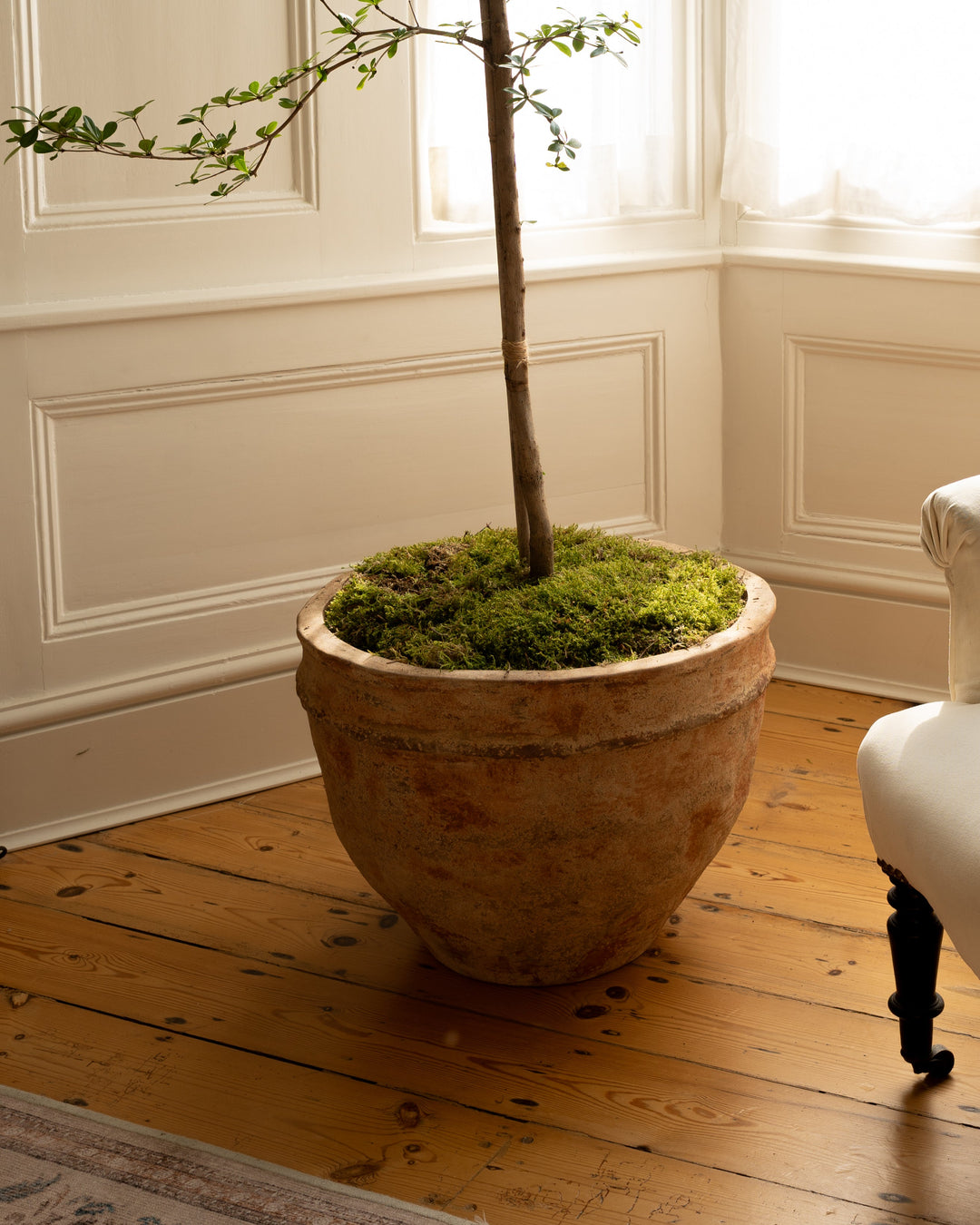
These trees are such a work of natural artistry that we like to give them the space to stand on their own, like a sculpture on a plinth, they really do not need to be clustered with other plants or furniture pieces. They are best paired with a statement pot that does them justice, either an antique urn or modern replica.
Choosing the Right Statement Plant for Your Space
When selecting an architectural plant, scale is often the most important consideration.
A larger plant can balance tall ceilings, open living spaces or wide windows, while smaller architectural plants are ideal for apartments or rooms where subtle structure is preferred.
Light levels are also important. Some plants thrive in bright spaces, while others tolerate lower light conditions commonly found in city homes.
Finally, the planter plays a significant role. A well-chosen planter can emphasise the sculptural form of a plant and integrate it seamlessly with the surrounding interior.
Choosing the Right Plant Height for Your Ceiling
Most homes have taller ceilings than we realise. Victorian and Edwardian terraced houses in the UK typically have ceiling heights between 2.4 and 2.7 metres, which means a taller plant often creates the best visual balance in a room.
In recent years we have become used to smaller houseplants, largely because these are easier to package and deliver through standard parcel networks. In larger rooms, however, plants under around 160cm can sometimes look slightly lost.
For many interiors, a plant between 170–200cm provides a much more balanced focal point.
In larger spaces, taller plants can help anchor the room visually. We generally recommend allowing 30–50cm of space between the top of the plant and the ceiling so the plant feels proportionate and has room to grow.
| Ceiling Height | Recommended Plant Height | Typical Space |
|---|---|---|
| 200–220 cm | 150–170 cm | Modern apartments / contemporary homes |
| 240–270 cm | 170–200 cm | Victorian or Edwardian rooms |
| 280–300 cm | 220–240 cm | Period properties / warehouse conversions |
| 300 cm+ | 250–270 cm | Double-height or mezzanine spaces |
How & Where Architectural Plants Work Best
Architectural plants are most effective when used deliberately within a room. Rather than simply filling empty corners, they can shape how a space feels and functions.
1. Zoning a Space
Positioning a plant slightly away from the wall — beside a reading chair or near the arm of a sofa — can help subtly divide an open-plan room.
This works particularly well in larger living areas where plants create gentle visual breaks between seating, dining and circulation spaces without adding physical barriers.
2. Creating a Focal Point
A single plant can occupy a position normally reserved for a sculpture or statement piece of furniture. Bay windows, empty corners or the end of a seating arrangement often provide the perfect setting.
Pairs of plants can also work beautifully to frame an existing feature, such as a fireplace or doorway. This is especially effective with glazed doors or openings where the plants can be appreciated from multiple rooms.
3. A Dramatic Backdrop
In some interiors, plants become part of the background atmosphere rather than the focal point. A large leafy plant placed behind a sofa or beside a bath can add depth and softness to a room.
Bathrooms are particularly well suited to this approach. Many tropical plants thrive in the humidity, creating a calming, almost rainforest-like atmosphere.
4. Artful Privacy
In many London homes — particularly bay-fronted terraces — street activity sits just beyond the window.
A well-placed foliage plant can provide a sense of privacy while still allowing natural light into the room. In this way, plants offer an elegant alternative to shutters or blinds while adding texture and interest to the space.
Bringing Nature Into Modern Interiors
Architectural plants offer something unique within interior design: a living element that changes slowly over time.
Their presence softens contemporary materials such as stone, glass and metal while adding depth and movement to otherwise minimal spaces.
For this reason, many designers consider a well-placed plant to be the finishing touch that makes a room feel complete.
Explore our collection of architectural indoor plants
Discover statement plants selected for modern interiors and grown by specialist nurseries.
If you would like assistance in specifying architectural plants for your space, our interior plant consultation provides a tailored plant plan. Learn more.