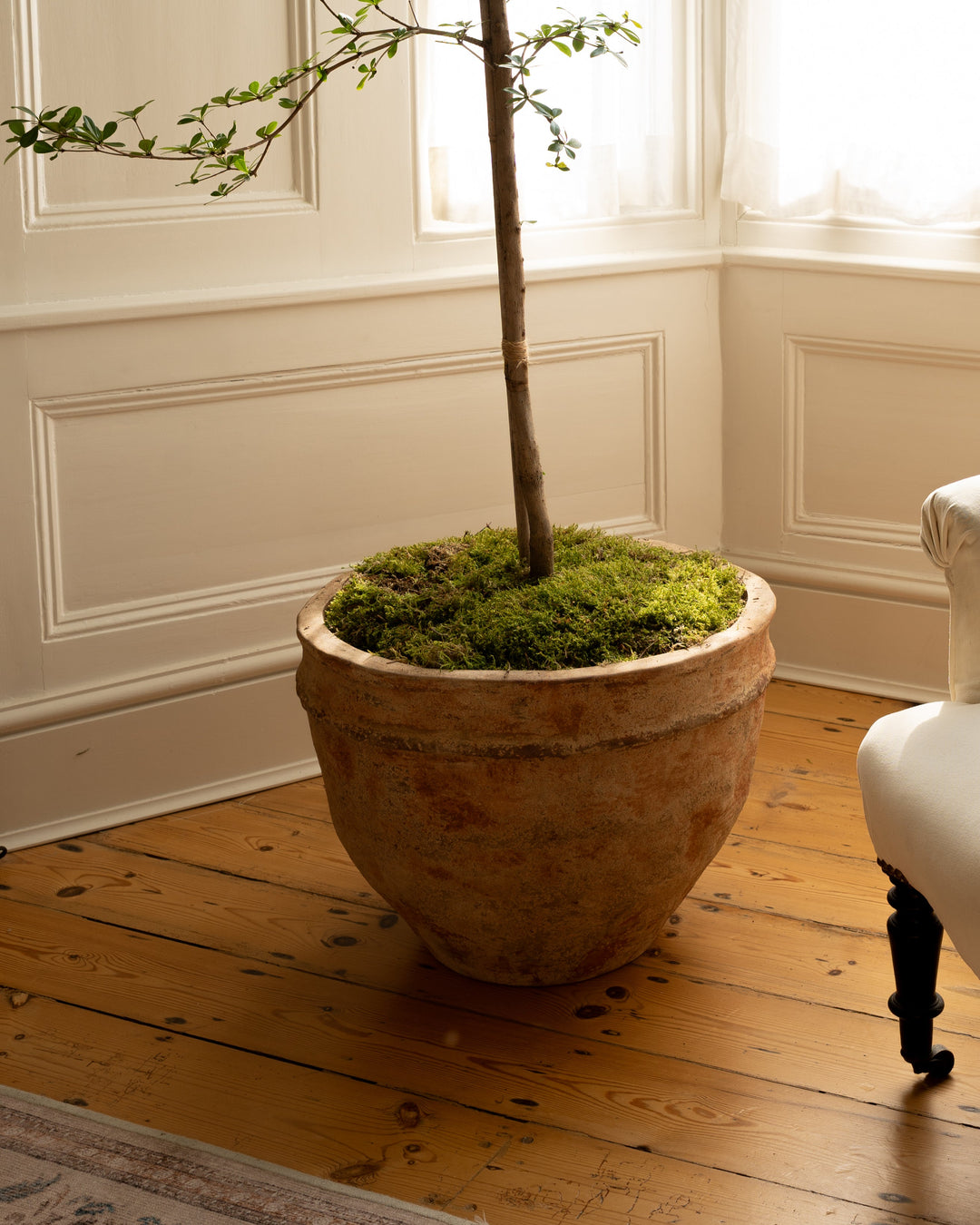
Large Indoor Plants for Living Rooms
Large indoor plants are one of the simplest ways to bring structure and warmth to a living room. In many homes they function almost like a piece of furniture or artwork, helping anchor the space while introducing natural texture.
Rather than filling a room with several small plants, a single larger plant often creates the strongest visual impact. When placed thoughtfully, a statement plant can soften architectural lines, balance furniture arrangements and help a living room feel complete.
Why Larger Plants Work Best in Living Rooms
Living rooms are usually the largest spaces in a home and often include multiple furniture groupings such as sofas, coffee tables and shelving. Smaller plants can easily disappear within this setting.
Larger plants, particularly those between 170–220cm tall, create a clear focal point that helps organise the room visually.
They also fill vertical space, which is often underused in interior design. By drawing the eye upward, taller plants help rooms feel more balanced and visually complete.
Where to Place a Large Plant in a Living Room
Beside a Sofa
One of the most natural placements for a plant is beside the end of a sofa. This helps frame the seating area while introducing height next to lower furniture.
In an Empty Corner
Corners often become unused space in living rooms. A taller plant can fill this area beautifully without making the room feel crowded.
Near a Window
Plants positioned near windows receive better light and often grow more evenly. This placement also creates a natural visual link between the interior and the outdoors.
Beside a Fireplace
In rooms with a fireplace, a plant positioned to one side can help balance the architecture and soften the surrounding materials.
Plants That Work Well in Living Rooms
Certain indoor plants naturally suit living rooms because they combine scale, structure and resilience. Larger plants with branching growth or strong foliage tend to anchor the space more effectively than smaller plants.
Bengal Fig Tree
Ficus benghalensis ‘Audrey’
The Bengal fig is one of the most elegant indoor trees for living rooms. Its soft green leaves and pale trunk create a lighter, more refined appearance than many other ficus varieties. As it matures it develops a branching structure that fills vertical space while maintaining an airy feel.
Weeping Fig Tree
Ficus benjamina ‘Exotica’
Weeping figs are classic indoor trees that work particularly well in larger rooms. Their cascading foliage forms a fuller canopy that softens modern interiors and adds movement to the space.
Narrow Leaf Fig
Ficus binnendijkii ‘Amstel King’
This ficus variety has long slender leaves and a graceful upright structure. It works well in living rooms where a plant is needed to add height without feeling overly dense.
Indian Laurel Fig
Ficus microcarpa ‘Nitida’
Indian laurel figs develop a dense canopy of glossy foliage, creating a strong architectural presence. Their rounded form works well in corners or beside seating areas where a fuller plant helps balance surrounding furniture.
Desert Cactus
Euphorbia erythrea
For more contemporary interiors, the desert cactus offers a striking sculptural alternative to leafy plants. Its upright columnar form works particularly well in minimalist living rooms where a clean architectural statement is desired.
Choosing the Right Size
Most living rooms benefit from plants between 170–200cm tall.
In homes with higher ceilings, plants between 200–220cm can create a stronger architectural presence.
As a general guide, allow 30–50cm of space between the top of the plant and the ceiling so the plant feels well proportioned within the room.
A Simple Styling Tip
Interior designers often position plants slightly away from the wall rather than pushing them tightly into corners.
Placing a plant beside the arm of a sofa or slightly offset from a window allows its natural shape to be appreciated and makes the placement feel intentional.
This approach helps the plant feel like a considered part of the interior rather than simply filling an empty space.
Summary
Large indoor plants can transform a living room with surprisingly little effort.
By choosing a plant with the right height and structure, it is possible to create a focal point that adds balance, warmth and natural character to the space.
Often, a single well-placed plant is enough to complete the room.