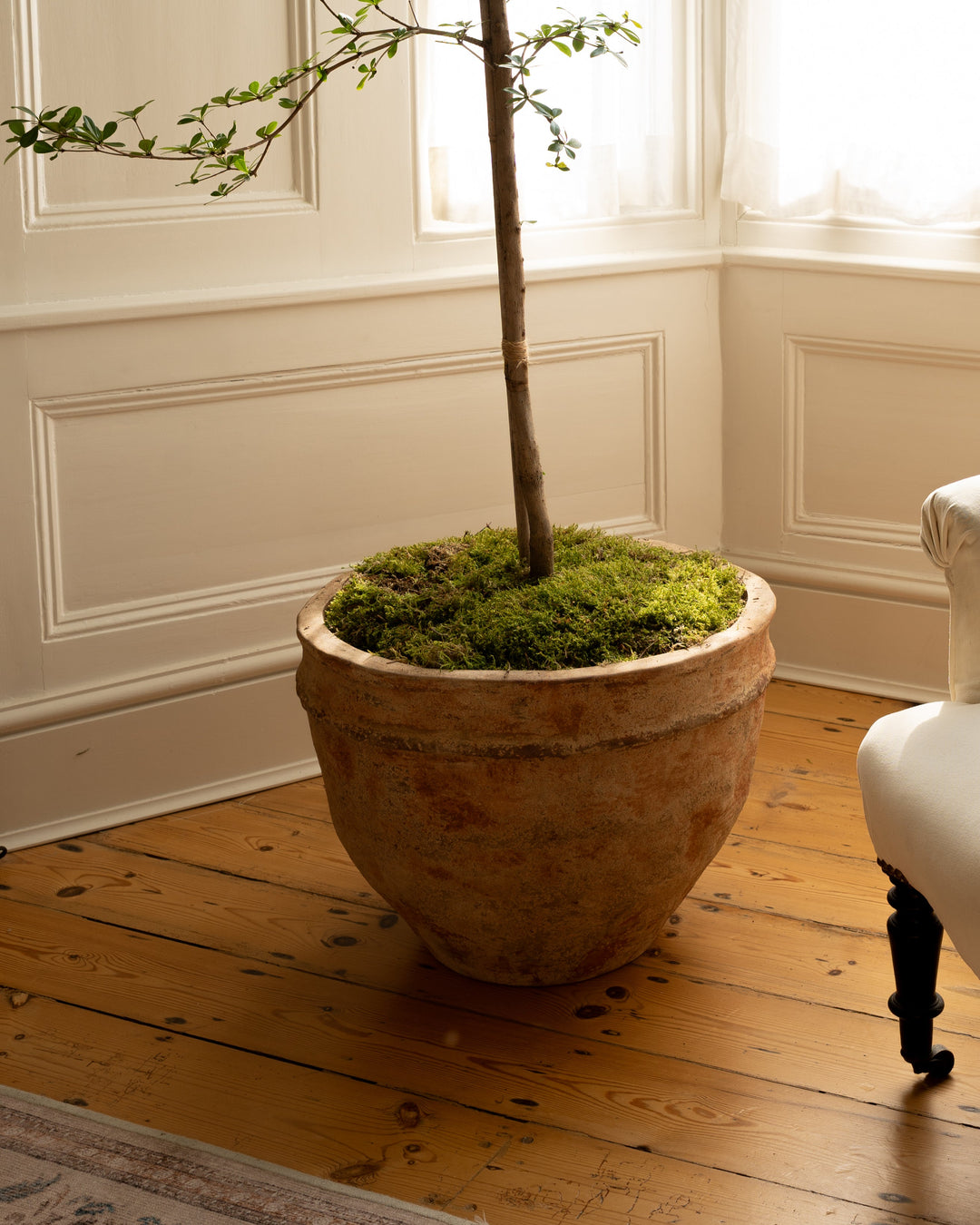
Soil, Compost and What Your Plant Actually Grows In
Every plant on our site tells you its preferred soil — Houseplant Mix for almost everything indoors, and a handful of honest exceptions outside. Here's what those labels mean, why drainage matters more than richness, and why your plant should probably stay in the pot it arrived in.
Drainage beats richness
The fastest way to kill a good plant is kindness: rich, moisture-hugging compost and a generous watering can. Roots need air as much as water, and most houseplant trouble that looks like thirst — yellowing, drooping, dropped leaves — is actually drowning. A good mix drains freely, holds a little moisture in reserve, and lets the roots breathe between waterings. When in doubt, choose the grittier mix and the smaller watering can.
Houseplant mix, demystified
The "Houseplant Mix" on our labels is a free-draining indoor compost: peat-free multipurpose lightened with perlite or bark so water runs through rather than pooling. Any good peat-free houseplant compost from a garden centre fits the bill. You don't need a different bag for every species — the palms, figs, ferns and philodendrons that fill most homes all want the same thing: drainage, and being left alone.
The honest exceptions
Ericaceous (acid soil). Camellias and Japanese maples want acid conditions — in a pot, that means ericaceous compost, nothing more complicated. Tap water in hard-water areas slowly sweetens the soil, so rainwater suits them when you can manage it.
The Mediterranean mix. Olives, bay, lemon and Yucca rostrata grew up on poor, stony hillsides and expect the same here: a loam-based compost (John Innes No.3) with added grit, in a pot that drains like a sieve. Winter wet kills more Mediterranean plants in Britain than winter cold ever does.
Humus-rich and moist. Tree ferns and fatsias are woodlanders — they like a leafy, moisture-retentive mix that never quite dries out. The one group where "keep it damp" is good advice.
Why your plant should stay in its grow pot
Every plant we deliver arrives in its plastic nursery pot — and for most, that's where it should stay. The grow pot drops straight inside a decorative planter: the plant keeps the drainage and root environment it was raised in, watering is easier to judge, and swapping planters takes seconds. It's how hotels and plant professionals do it, and it's why our planters are sized by opening rather than by soil volume. A pot liner catches any run-through in the planter.
Repotting is only worth doing when a plant has genuinely outgrown its pot — roots circling the surface or pushing through the base — and then only one size up, in spring.
Want it planted properly?
For plants going permanently into decorative pots — troughs, entrance planters, outdoor displays — our Professional Planting Finish does it the way our own installation team does: the right mix for the species, correct drainage layering, and a dressed finish. Add it to any plant and planter, and it arrives done.