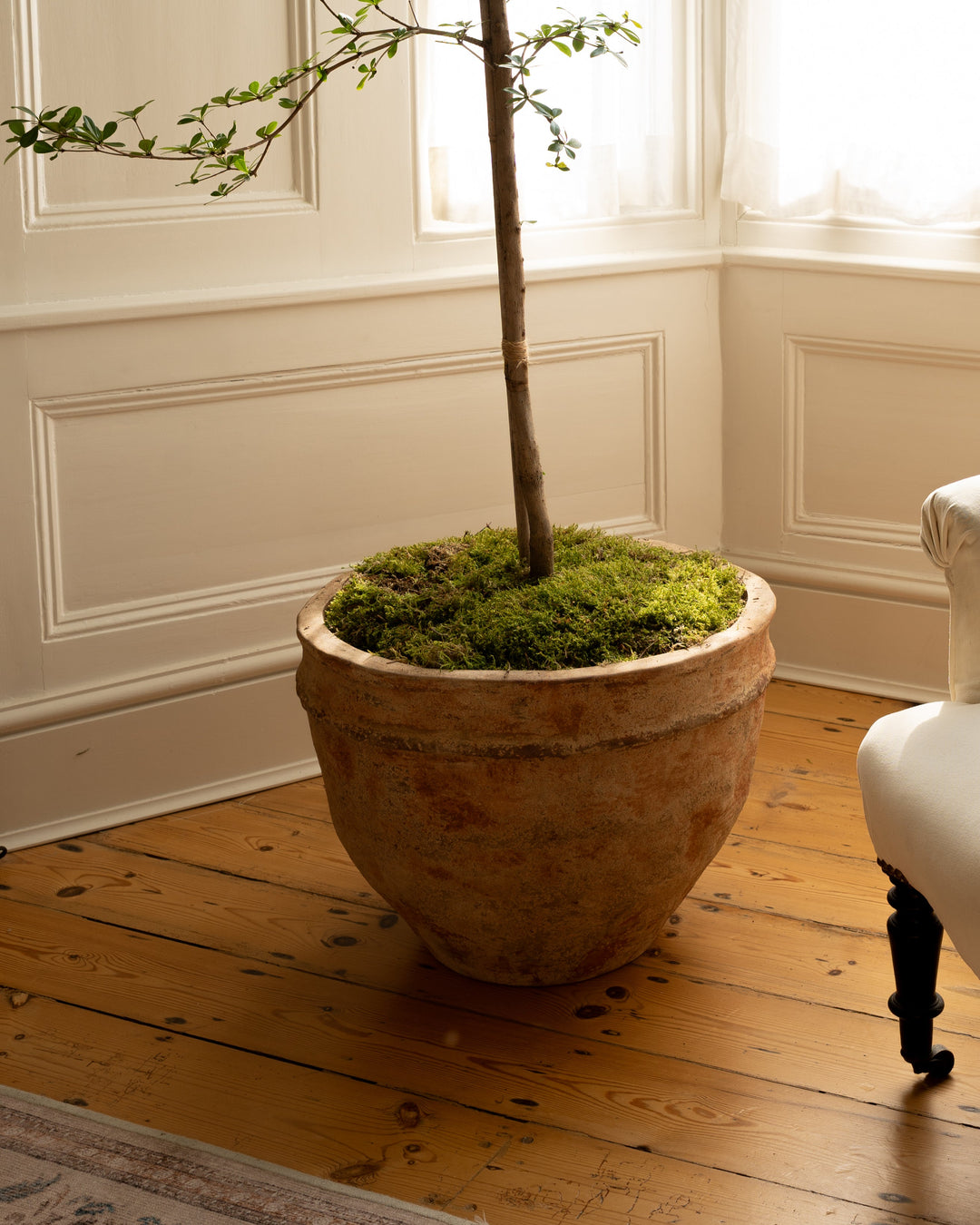
The bay tree is the classic doorway evergreen — aromatic, dense, endlessly clippable, and the same plant whose leaves flavour your cooking. Give it sun, shelter and a good pot and it will hold its form for decades.
Position
Full sun to light shade, with shelter from cold winter winds — the wind, more than the cold itself, is what browns bay leaves in a British winter. A porch, a courtyard, a spot against the house wall are all ideal. Pairs flanking an entrance is the look for a reason: it works.
Hardiness
Hardy to around −8°C in a sheltered spot. In a hard freeze the leaves may scorch, but established plants regrow from the stems in spring. Potted bays are more vulnerable at the roots than in the leaves — in a prolonged deep freeze, wrap the pot (not the plant) in fleece or hessian, or shuffle it into a porch or against the house for the worst of it.
Watering
In a pot, water regularly through spring and summer — the rootball dries faster than you'd think under that dense canopy, and rain often never reaches it. Ease right off in winter; cold and wet together is the combination bay dislikes most. Make sure the pot drains freely and stands on feet.
Feeding
A balanced feed in spring and again in midsummer keeps potted bay deep green. Yellowing leaves are usually hunger or waterlogging rather than disease.
Clipping
Clip to shape twice a year — late spring and late summer — with secateurs rather than shears if you have the patience, cutting just above a leaf so no cut edges show. Bay responds brilliantly and holds a crisp ball, cone or lollipop between trims.
Good to know
The clippings are the herb: dry the leaves for the kitchen. In pots, repot every two to three years into a loam-based compost (John Innes No.3) one size up — a bay that's been in the same compost for years will quietly starve no matter how much you feed it.