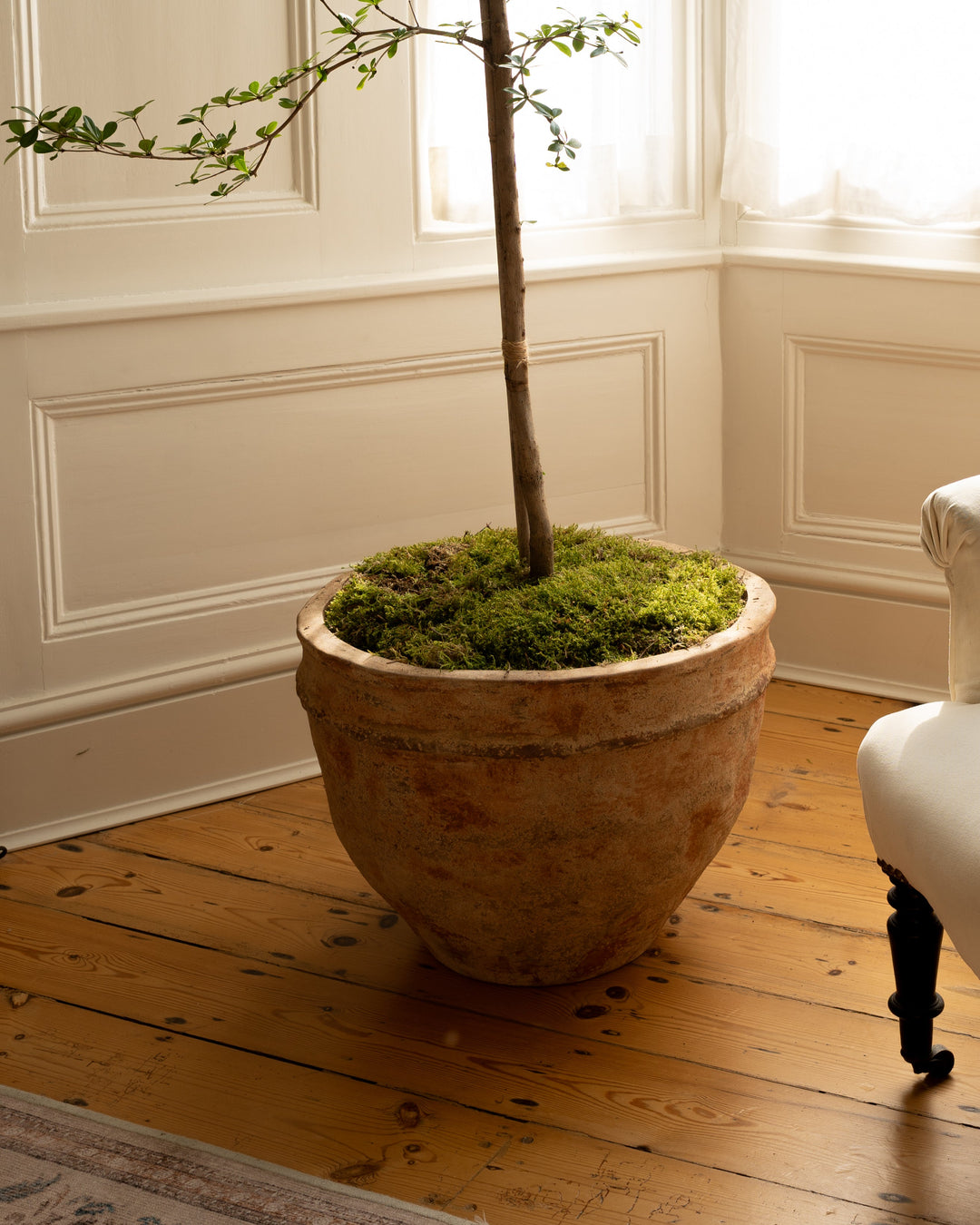
The fastest way to change a room isn't paint or furniture — it's one large plant. A two-metre tree does something a shelf of small pots never will: it gives a room height, softness and a sense that someone lives here on purpose. But large plants punish bad placement more than small ones. Here's how designers think about it.
How big should an indoor plant be for my room?
Work with your ceiling. In a standard-height room (around 2.4m), a plant of 160–200cm including the pot feels generous without crowding; with higher ceilings, go taller — a 2.2m+ specimen in a period room with 3m ceilings looks intentional, where a 1.2m plant would look lost. The designer's rule of thumb: the plant should reach roughly two-thirds of the way from floor to ceiling. When in doubt, go one size larger than feels safe. Undersized is the most common mistake we see.
One large plant or several small ones?
One. A single statement specimen reads as a design decision; a scatter of small pots reads as a collection that happened by accident. If you want more than one plant in a room, vary the heights deliberately — one tall (180cm+), one mid (about 1m), one low — and group them at a corner rather than spreading them evenly around the room like sentries.
Which large plant for which room?
Living room: this is where your boldest plant belongs — a branching fig tree, a bird of paradise, or something architectural from our Architectural collection if the interior is clean-lined. Bedroom: softer silhouettes suit the room's purpose — a kentia palm moves gently and tolerates the lower light bedrooms usually have. Hallways and landings: the toughest brief — low light, draughts, no one remembers to water there. A branched dragon tree or a tall snake plant will take it. Home office: something structured rather than billowing — a yucca keeps its silhouette without demanding attention on deadline day.
What pot suits a large indoor plant?
Heavier and simpler than you think. A large plant needs visual ballast: as a guide, the pot should be about a quarter to a third of the total height, in one confident material — stone, concrete, aged terracotta — rather than a pattern. Keep the plant in its nursery pot inside the decorative one (with a liner) so watering and swapping stay easy. Browse shapes and sizes in our pots and planters.
Where should a large plant stand?
Where the light actually is, not where the empty corner is. Most statement species — figs, yuccas, birds of paradise — want to be within a metre or two of a decent window. The classic spots that work: beside (not in front of) a window, at the end of a sofa, softening the corner of an alcove, or framing a doorway in pairs. The classic spot that fails: the dark corner farthest from the glass, which is usually the one people buy the plant for. If that's the corner you need filled, choose from the shade-tolerant end — dragon tree, snake plant, kentia — and it will hold.
Do large plants need more care?
Usually less. A big plant has reserves — a large root ball dries slowly, so most statement trees want watering every week or two, not daily fussing. The two habits that matter: rotate the pot a quarter-turn now and then so it grows evenly toward the light, and dust the leaves occasionally so they can breathe. Every plant we deliver comes with lifetime horticultural advice, so the care part is never yours to solve alone.