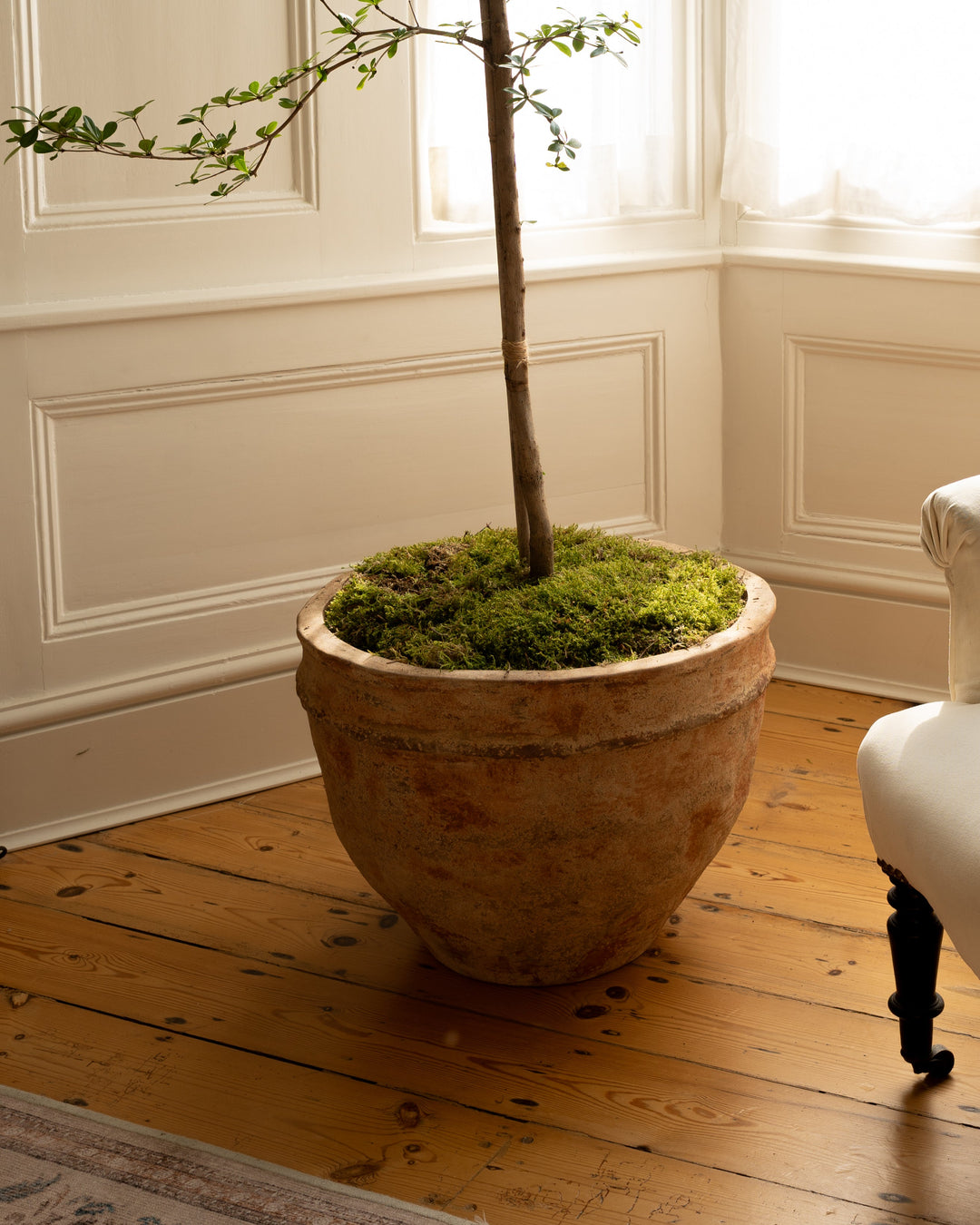
London's summers are changing. Hosepipe bans arrive earlier, heatwaves run longer, and the weekly watering round that used to be a pleasure can start to feel like a liability — especially in August, when half the city is away. The good news: some of the most beautiful plants on earth evolved for exactly these conditions, millions of years before we started worrying about them.
What does a changing climate mean for houseplants?
Indoors, hotter summers mean brighter, drier rooms — south-facing spaces that once suited ferns now behave more like Marrakech than Manchester. Rather than fighting it with humidifiers and daily misting, the smarter move is to plant with it: choose species that store water in their stems, trunks and leaves, and that read a hot, bright room as home.
Which houseplants need the least water?
The desert classics, and they happen to be some of the most sculptural plants you can own. A desert cactus brings two metres of architecture on a few waterings a year. Yucca elephantipes carries sword-shaped crowns on thick, water-storing trunks. Snake plants and ZZ plants shrug off weeks of neglect and still look sharp, and a branched dragon tree asks for almost nothing — even in lower light. We keep all of them in one place: our Plants for Our New Climate collection.
How do you style drought-tolerant plants?
Sparsely — that's the point. Desert planting is about silhouette and negative space: one strong form against a plain wall beats a cluttered shelf of small pots. Give a cactus or yucca room to cast a shadow, pair it with a heavy, simple pot in stone or concrete tones, and resist the urge to fill the gaps. The restraint reads as confidence, and it happens to be the lowest-maintenance look in interiors.
What about terraces and gardens?
Outside, the same logic points Mediterranean: olive trees have spent several thousand years practising for a London heatwave, and Yucca rostrata — the silver-blue sphere on a trunk that serious gardens are planting right now — is as drought-proof as ornamental planting gets. In pots, use large containers (they hold moisture longer than small ones), water deeply but rarely, and mulch the surface.
Do low-water plants still need care?
A little — the skill is restraint. The one thing that reliably kills a desert plant is kindness: water only when the soil is fully dry, ensure drainage, and give them your brightest spot. Every plant we deliver comes with our 30-day guarantee and lifetime horticultural advice, though these are the ones that will need it least.