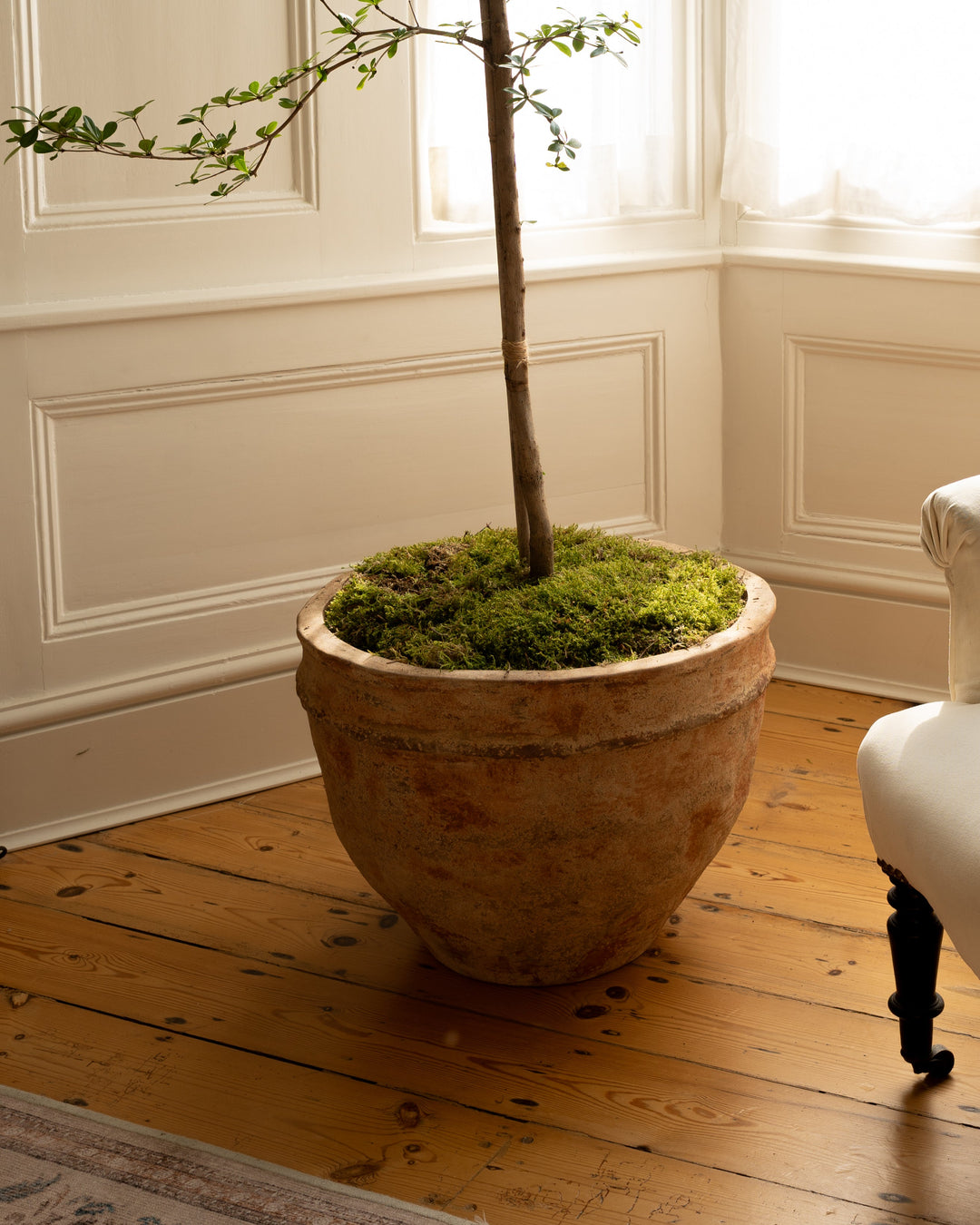
No hardy shrub gives a truer blue than ceanothus — for a few weeks in late spring the whole plant disappears under flowers, and the bees arrive in numbers you can hear. It's a Californian native, and the secret to a long-lived plant is remembering that: sun, drainage, and benign neglect.
Position
Full sun, in the warmest, most sheltered spot you can offer — against a south- or west-facing wall is classic and ideal. The wall gives shelter from cold winds and radiates warmth, and a wall-trained ceanothus in full flower is one of the great sights of an English May.
Soil and watering
Free-draining is non-negotiable; ceanothus is quick to sulk in heavy, wet ground. Water through the first season to establish, then largely leave it to the rain — this is a genuinely drought-tolerant shrub once its roots are down. In pots, water when dry in summer and keep winter watering minimal.
Feeding
Barely. Rich living produces lush, frost-tender growth and a shorter life. A light spring feed for potted plants is the most it needs.
Pruning
Trim lightly straight after flowering to keep it compact — and never cut into bare old wood, which rarely reshoots. Little and often, from a young age, is the whole art of ceanothus pruning.
Hardiness
Hardy to around −10°C in a sheltered position. What tests it isn't frost so much as cold wet winters and exposed, windy sites — which is why the warm wall matters. In a brutal winter it may lose foliage or a branch; established plants usually shrug it off.
Good to know
Ceanothus is naturally fairly short-lived — ten to fifteen good years is a fine innings — and fast to reach flowering size, which is the trade. Plant it for the blue, enjoy the bees, and don't take it personally when an old plant finally bows out.