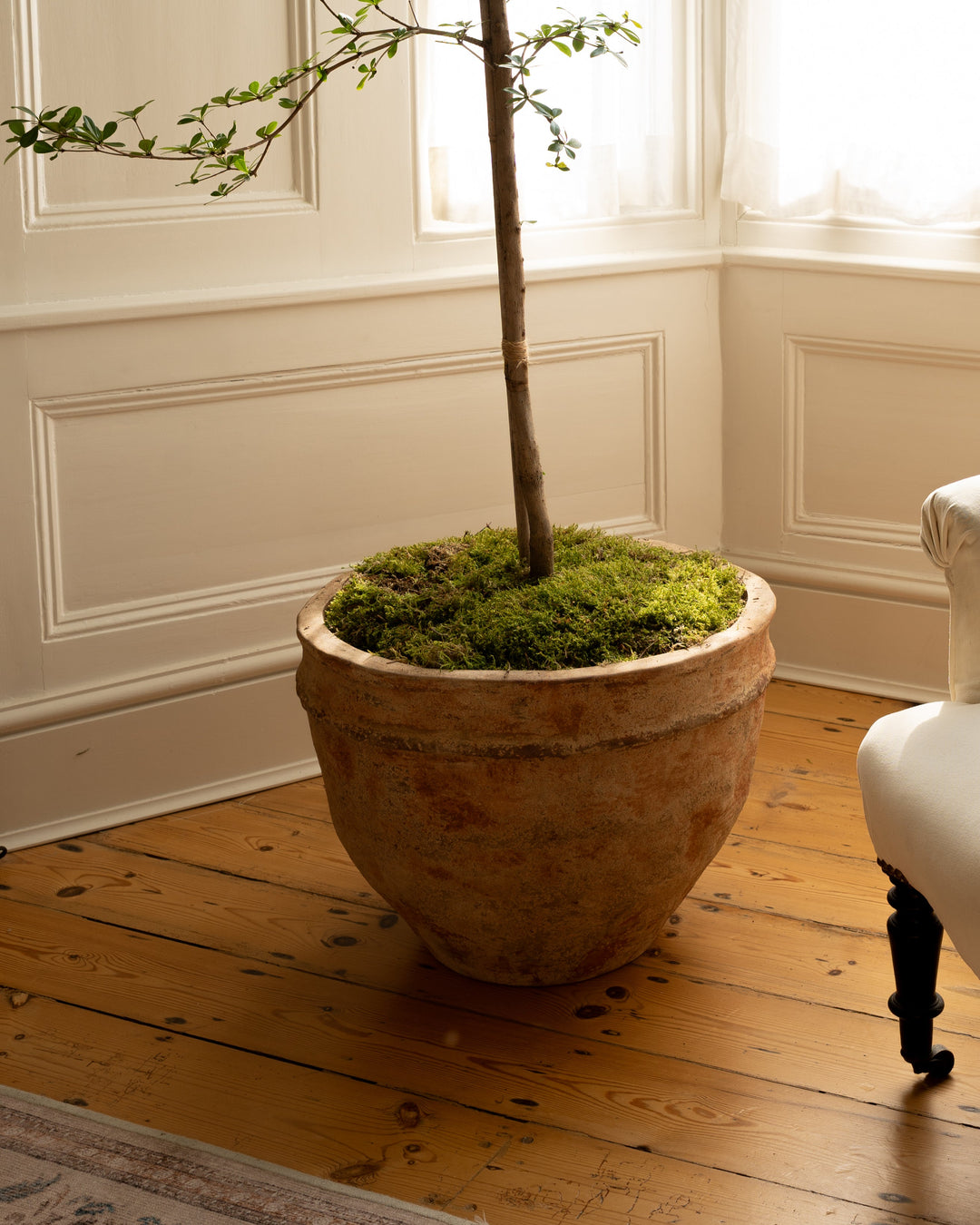
Indoors, light is about distance from a window. Outdoors it's about geometry — which way your space faces, what shades it, and what the wind does to whatever you place there. Ten minutes of honest observation saves years of the wrong plant in the wrong corner. Here's how to read your space the way we do on a site visit.
Aspect: the one fact that decides most of it
Stand with your back to the wall your garden, terrace or balcony faces out from, and check your phone's compass.
South-facing — sun most of the day, six hours or more in summer. The Mediterranean bench: olives, bay, lemon, Yucca rostrata, star jasmine. The challenge isn't light but water and reflected heat in pots — free-draining compost and honest watering in the first season.
West-facing — shade until midday, then strong afternoon and evening sun. Suits nearly everything that likes sun; the gentler morning start also makes it the safest all-rounder for camellias and maples that dislike scorching after cold nights.
East-facing — morning sun, afternoon shade. Good for wisteria, fatsia and tree ferns, but be careful with camellias in frost-prone spots: early sun on frozen buds is what browns the flowers, not the frost itself.
North-facing — bright but largely sunless. This is not a dead zone; it's tree fern and fatsia country, where woodlanders keep their deep green without scorch. What it won't do is ripen an olive or please a yucca.
Exposure: what the light guide maps don't tell you
Wind matters as much as sun on balconies, roof terraces and coastal gardens. Constant wind shreds large soft leaves and dries pots twice as fast. If your space is exposed, favour small, tough or needle-like foliage — olives, rostrata, bay — and be sceptical of anything with big soft leaves, however sunny the aspect. Sheltered courtyards do the opposite: they trap warmth and let you grow half a zone bolder than your postcode suggests.
Reading shade honestly
"Partial shade" on a label means three to six hours of direct sun. Watch your space on a clear day — morning, midday, late afternoon — and count. Buildings, trees, and parapets move the goalposts hour by hour, and most disappointments trace back to optimism at this step. If in doubt, count the hours in June and remember December: a spot that's sunny in midsummer may see no direct light at all for three winter months.
The shorthand on our plant pages
Full sun: six-plus hours — south and open west aspects. Partial shade: three to six hours — east, dappled west, or bright gaps between buildings. Shade: under three hours — north walls, basements wells, and under trees. Every outdoor plant we sell shows its preference, and the honest match beats the hopeful one every time.
Unsure what your space is? Send us photos taken morning, noon and late afternoon — our horticulturists read aspect for a living, and it's the first thing we assess on any exterior consultation.