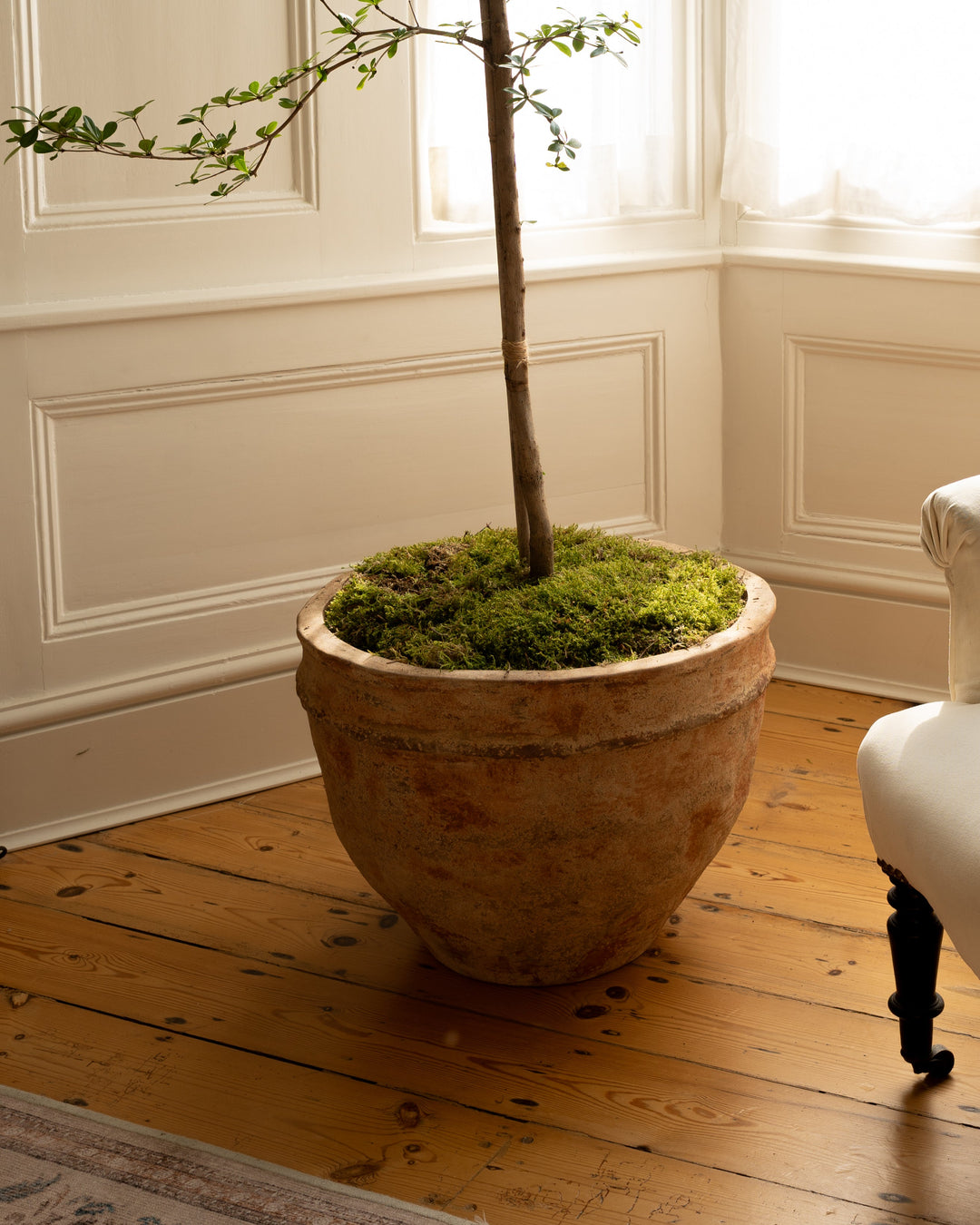
Yucca rostrata is the most architectural plant you can grow outdoors in Britain — a perfect silver-blue sphere of fine leaves carried on a slow-built trunk. It looks like it needs a desert and a heat lamp; in truth it needs sun, drainage and to be left alone. Here's the honest version of looking after one.
Position
Full sun, as much as you can give it. A south- or west-facing spot, a gravel garden, a raised bed, a courtyard that traps heat — all ideal. It shrugs off wind and salt air, which makes it one of the few statement plants that genuinely enjoys an exposed roof terrace or coastal garden. What it cannot negotiate on is drainage: never plant it into heavy, wet ground unimproved.
Hardiness — and the one real enemy
Established and dry at the root, rostrata takes around −12°C without complaint; mature plants have weathered worse. What kills yuccas in Britain is not frost but the combination of cold and wet — roots sitting in sodden winter soil. Solve drainage and you have solved winter. In the ground, that means grit worked generously into the planting hole and ideally a slight mound or slope. In a pot, it means a free-draining loam-based mix (John Innes No.3 with added grit), feet under the pot, and no saucer.
Watering
Water regularly through the first growing season while it establishes — then stop being helpful. From the second year, rain does the job in the ground; potted plants want a drink only when the mix has dried right out in summer, and next to nothing from autumn to spring. If you're unsure whether to water a rostrata, don't.
Feeding
A single light feed with a balanced fertiliser in late spring is plenty. This is a plant built for poor, stony soil — richness produces soft, uncharacteristic growth and dulls that steel-blue colour.
The leaf skirt
As the trunk extends, the lower leaves fade and fold down into a dry thatch — the "skirt". Both looks are correct: leave it for the classic desert silhouette, or trim the dead leaves close to the trunk with secateurs for a cleaner, more sculptural stem. Wear sleeves; the leaf tips mean it.
In pots
Rostrata suits container life well — it grows slowly, holds its shape, and a generous pot with sharp drainage will keep it happy for years. Choose a planter at least 10cm wider than the root ball, use loam-based compost with grit, raise the pot on feet, and site it where winter rain isn't constant — under an overhang or against a warm wall in the wettest months if you can.
Good to know
Growth is slow — a few centimetres of trunk a year — which is why plants with real trunk are decades old and priced accordingly, and why a good rostrata is bought at the size you want rather than grown into it. Keep it out of reach of pets that chew: like all yuccas, the leaves upset stomachs. And if you'd like to see what one becomes, there's a fine specimen standing outside our Chelsea showroom.