Business Installation
GRP Planter Liners: How to Line a Built-In Planter
A built-in planter should never hold compost directly. Here is what a GRP liner is, how it compares with the alternatives, and how to measure and specify one.
A built-in planter should never hold compost directly. It needs a separate watertight liner inside it, and for most projects the best one is made of GRP.
What a GRP liner is
GRP stands for glass-reinforced plastic, better known as fibreglass: layers of glass fibre set in resin over a mould. The result is a rigid, seamless tub that is light enough to carry and does not leak, rot or rust. It is the same material used for boat hulls and water tanks.
A liner is simply a GRP tub made to fit inside a planter. The planter becomes a sleeve, and the liner does the wet work.
Built-in planters need this because the things they are built from do not like water. Timber and MDF swell, plasterboard fails, stone and render stain, and steel corrodes. Damp compost held against any of them will find a way through within a season or two. Indoors, it then finds the floor below.
A separate liner also means the planting can be lifted out. If the joinery ever needs repair, or the scheme changes, nothing has to be dug out by hand.
GRP against the alternatives
There are other ways to line a planter. Each has a place, and each has a way of failing.
| Option | Good for | Where it goes wrong |
|---|---|---|
| GRP liner | Built-in planters of any shape, indoors or out | Has to be measured and made, so it needs lead time |
| Off-the-shelf plastic trough | Standard rectangular voids on a tight budget | Fixed sizes leave gaps and waste depth; thin plastic bows when full |
| Zinc or galvanised steel liner | Simple rectangular runs | Seams and corners are weak points; corrodes over time in wet compost |
| Pond liner or membrane sheet | Large, irregular outdoor beds | Folds at corners, punctures easily, and relies on perfect fixing at the rim |
| Paint-on waterproofing | Masonry planters outdoors | Only as good as the surface under it; cracks when the structure moves |
The common thread is seams. Sheet, metal and paint systems all depend on joints staying sealed for years under wet compost and root pressure. A GRP liner is one piece, so there is no joint to fail.
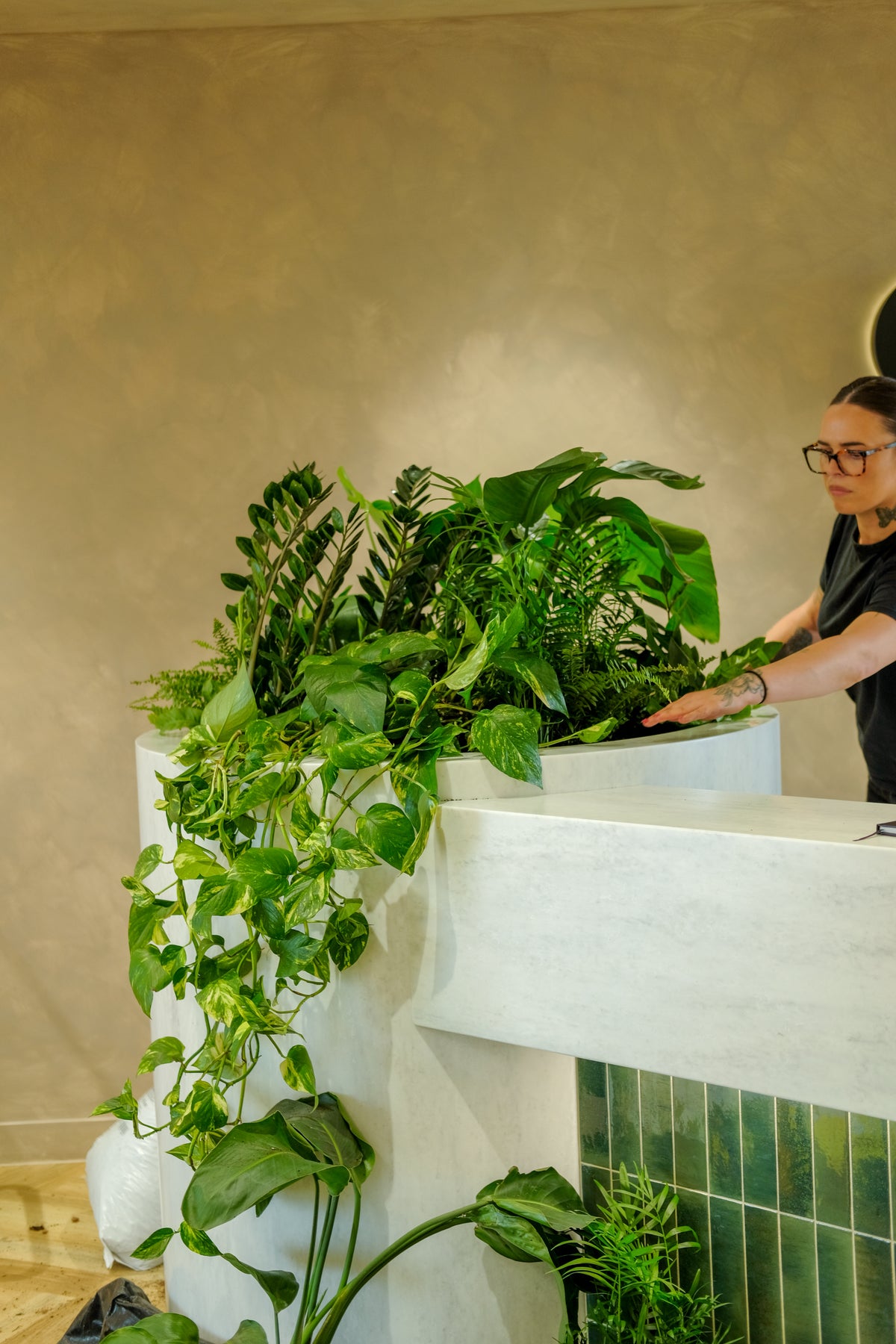
It can also be made to almost any shape. Curves, circles, tapers and long runs are all possible, which is why it suits reception desks, banquettes and joinery that was drawn before anyone thought about the plants.
Sealed or draining
The first decision is whether the liner holds water or lets it out. It depends on where the planter is.
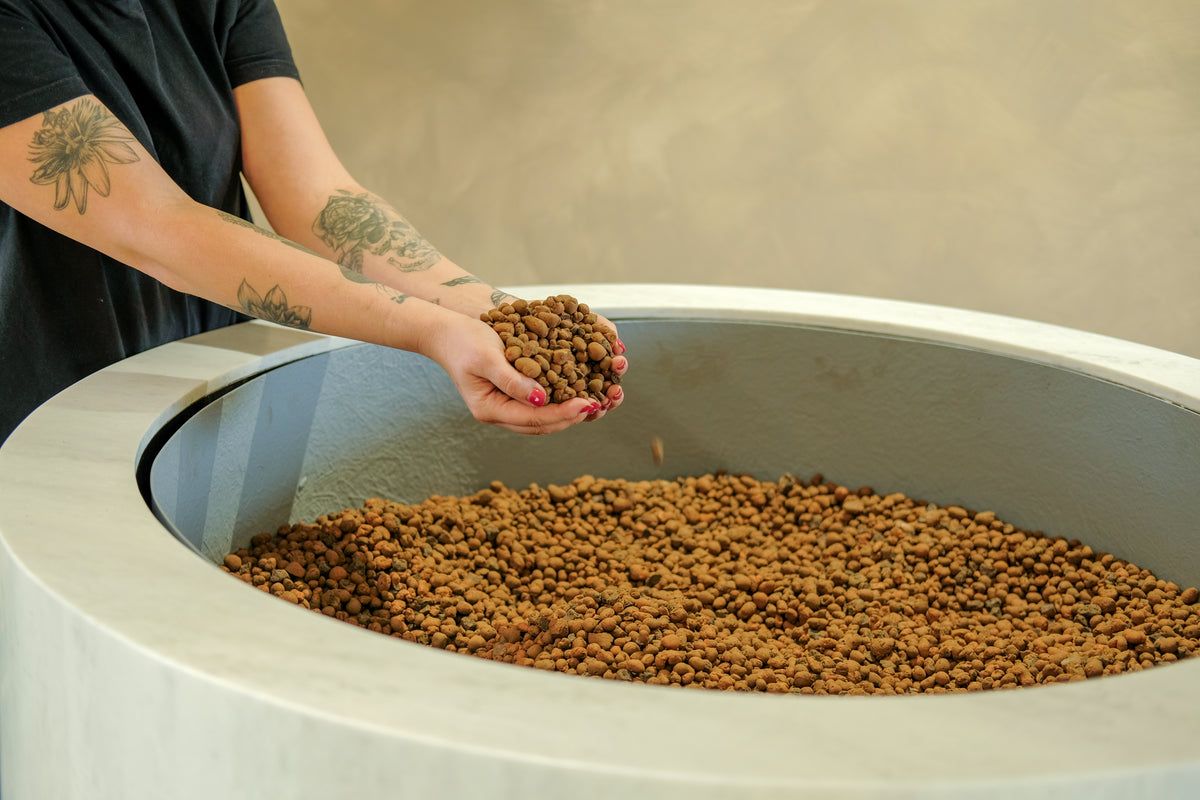
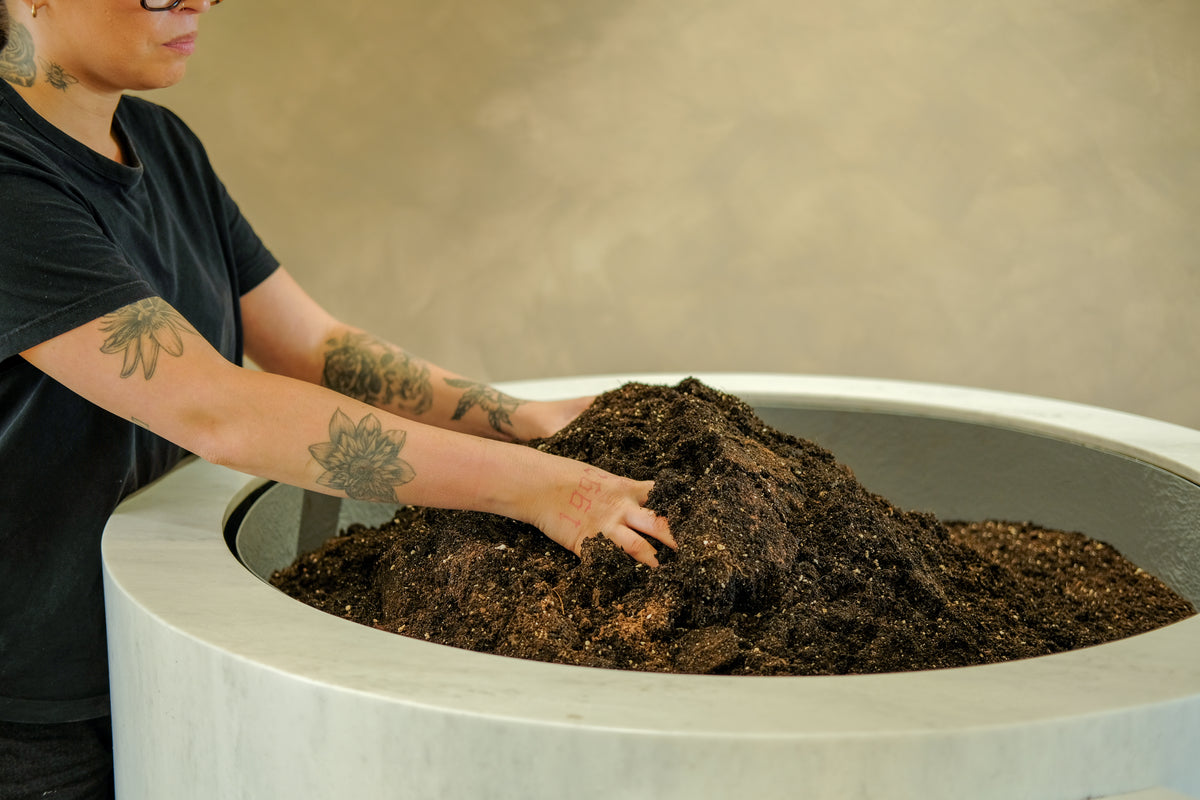
Indoors, the liner is sealed. There are no drainage holes, because there is nowhere for the water to go. Drainage happens inside the liner instead: a layer of expanded clay pebbles at the base gives surplus water somewhere to collect, below the roots. Compost goes on top, and the plants are watered little and carefully.
Outdoors, the liner drains. Rain will fill a sealed liner and drown the plants, so outdoor liners have drainage holes. The planter itself then needs a way to let that water escape, through weep holes or an outlet at the base, and the liner should sit slightly raised so the holes do not block.
A sealed liner outdoors and a draining liner indoors are the two mistakes we are most often asked to put right.
Measuring and specifying
A liner is made to the inside of the planter, so the measurements that matter are internal.
- Measure the clear internal length, width and depth at the narrowest points. Built voids are rarely square, so check both ends and the middle.
- Check the opening. The liner drops in from above. If a rim, capping or countertop overhangs the void, the opening is the limiting size, not the void.
- Allow a tolerance. The liner is made slightly smaller than the void so it slides in without forcing.
- Decide where the rim sits. Usually just below the finished edge, so the liner is hidden once the planter is top dressed.
- Say whether it is indoors or outdoors, so it is made sealed or with drainage holes.
Depth deserves a second thought. The liner has to hold a drainage layer as well as compost, and plants need real root room. Shallow voids limit you to small plants that dry out fast; a deeper void gives far more choice and far less maintenance.
The best time to do all this is at drawing stage. If we see the joinery drawings before the planter is built, we can advise on depth, access and weight, and the liner arrives ready for planting day.
Common questions
Can I just line the planter with plastic sheet?
For a temporary display, yes. For anything permanent, no. Sheet folds at the corners, punctures on the first trowel and leaks at the rim.
The planter is already built. Is it too late?
No. As long as the void is empty and the opening is clear, a liner can be measured and made to fit.
Will the liner show?
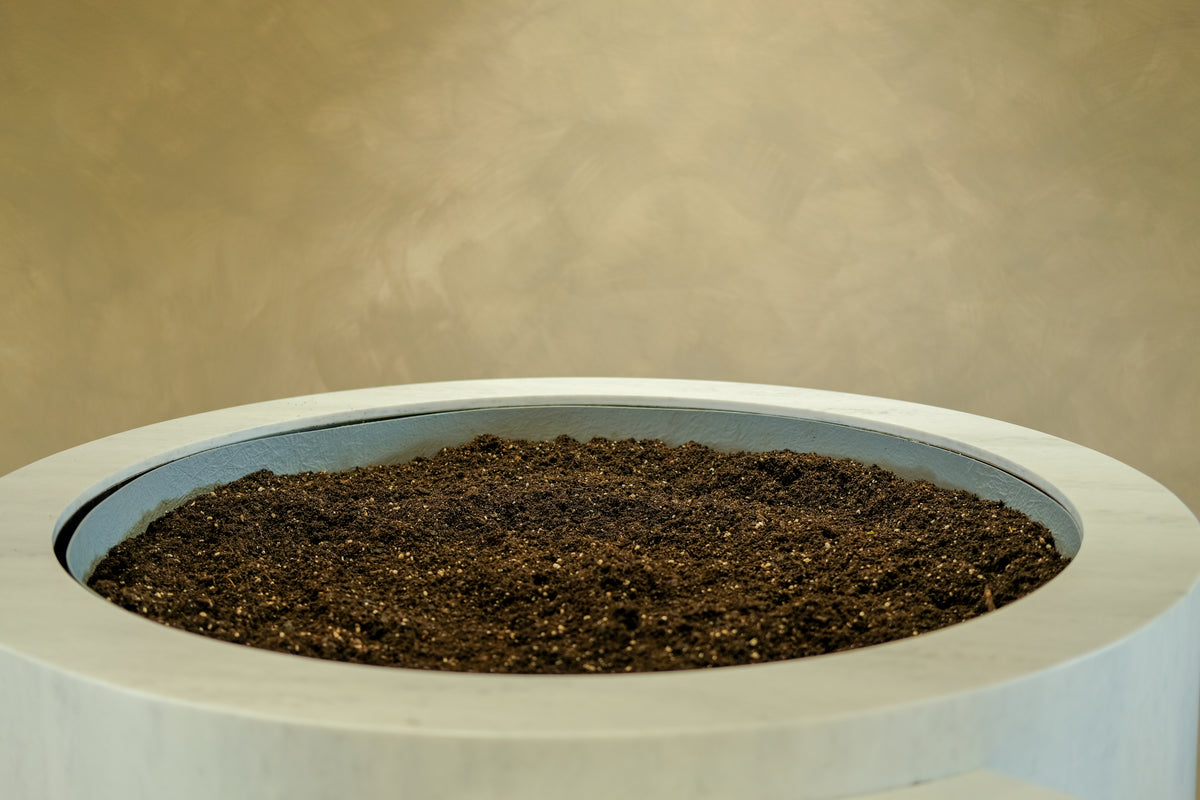
It should not. The rim sits below the planter edge and the surface is finished with clay pebbles or another top dressing, so all you see is planting.
Do the plants go into the liner in their pots, or planted in?
Either works. Planting directly into compost looks fuller and lets roots spread. Keeping plants in their nursery pots makes swapping them easier, which suits spaces where displays change.
How heavy is it?
The liner itself is light. The weight is in what goes inside: wet compost is heavy, so the planter base needs to be built to carry it.
How long does a GRP liner last?
Many years. It does not rot, rust or break down in contact with wet compost.
Planning a built-in planter? Send us the dimensions or drawings and we will specify the liner and the planting together.

Planning planting into a fit-out? Talk to us early — the light survey is worth more before the ceiling goes in than after. See more projects or email projects@plantdrop.co.uk.