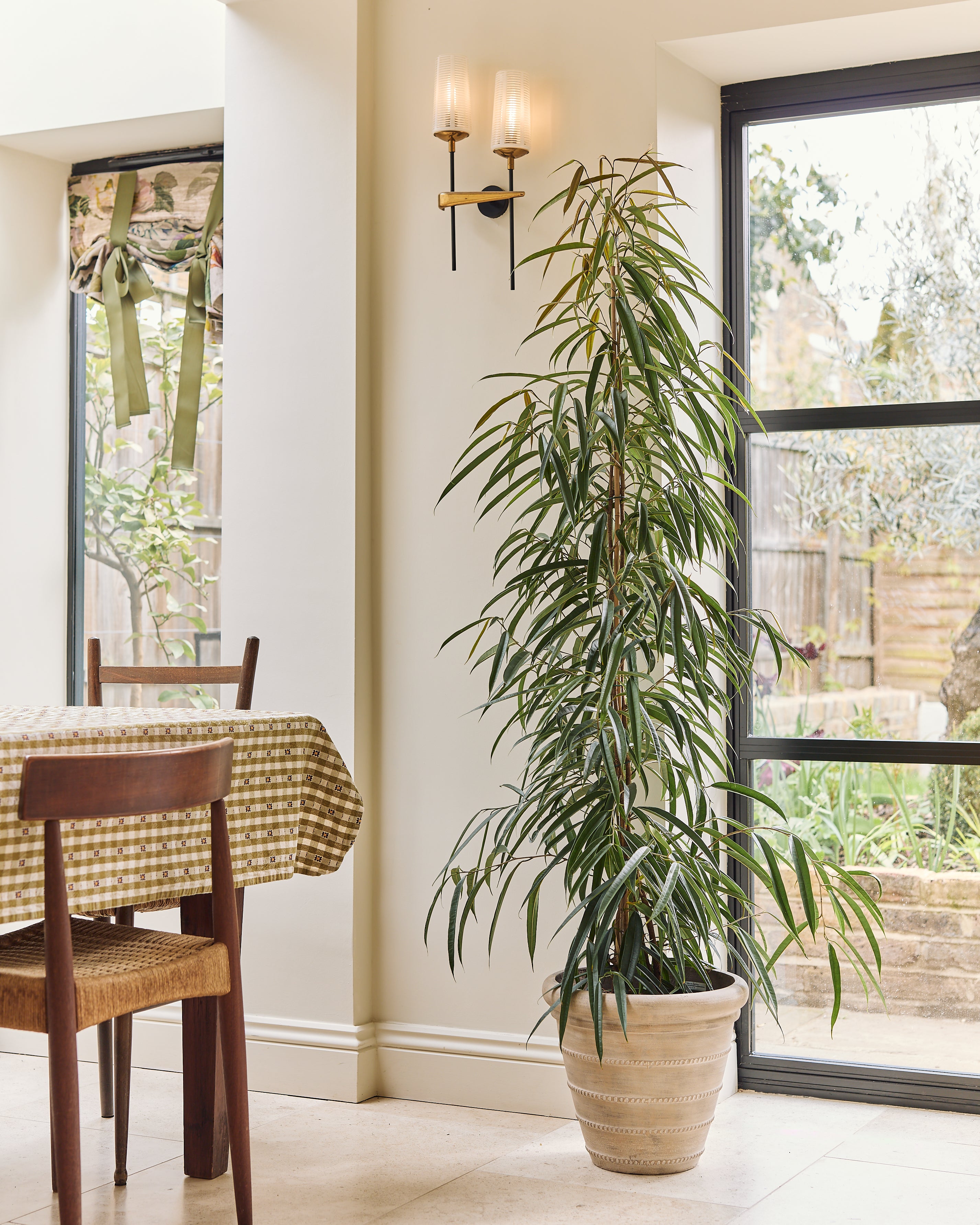
The Fig Bush Binnendijkii Alii is a variety of the Ficus plant family, commonly known for its slender, lance-shaped leaves and elegant growth habit. It's relatively easy to care for, making it a great option for indoor environments. Here's a detailed care guide for keeping your Fig Bush Binnendijkii Alii healthy and thriving:
1. Light Requirements
- Bright, indirect light is ideal for this plant. While it can tolerate lower light conditions, its growth will slow down, and the leaves may lose their vibrancy.
- Avoid direct sunlight, as it can scorch the leaves, leading to browning or dropping.
2. Watering
- Water the plant when the top 2-3 cm of soil is dry. Stick your finger into the soil to check.
- Do not let the plant sit in waterlogged soil, as this can lead to root rot.
- Reduce watering during winter, as the plant's growth slows.
3. Humidity and Temperature
- The Fig Binnendijkii Alii prefers moderate to high humidity levels. If the air is too dry, especially in winter, consider misting the leaves or using a humidifier.
- Keep the temperature between 15°C and 24°C. Avoid cold drafts, as the plant is sensitive to sudden temperature changes and chilly environments.
4. Soil
- Use a well-draining potting mix. A mixture of regular potting soil, perlite, and peat moss works well to ensure good aeration and prevent water retention.
5. Fertilising
- During the growing season (spring and summer), feed your Fig Bush Binnendijkii Alii with a balanced, water-soluble fertiliser every 4-6 weeks.
- There’s no need to fertilise in the winter months when the plant is dormant.
6. Pruning
- Regular pruning is essential to maintain the shape of the plant and encourage bushier growth.
- Remove any dead or yellowing leaves, as well as leggy growth, to keep the plant looking tidy.
- If the plant becomes too tall or leggy, you can cut back the stems by about a third during the growing season.
7. Repotting
- Repot every 2-3 years or when the plant becomes root-bound. Choose a pot that’s one size up, and make sure it has drainage holes.
- Spring is the best time for repotting, just as the plant starts its active growth period.
8. Pests and Problems
- Common pests include spider mites, scale, and mealybugs. Inspect your plant regularly, and treat infestations promptly with insecticidal soap or neem oil.
- Watch for leaf drop, which could be caused by overwatering, sudden changes in light, or temperature fluctuations.
9. Toxicity
- Keep in mind that Ficus plants are toxic to pets if ingested, so it’s best to keep them out of reach of curious cats or dogs.