If you've shopped for topiary lately you'll have noticed something: the spirals and cones that used to be box are now almost all yew. That's not fashion — it's survival. Box blight and the box tree caterpillar have made buxus close to ungrowable in London, and yew (Taxus baccata) has stepped into its place: denser, deeper green, longer-lived, and untouched by either problem. A trained yew spiral takes years to shape, which is exactly why it reads as a considered piece rather than a commodity.
Where should a yew topiary go?
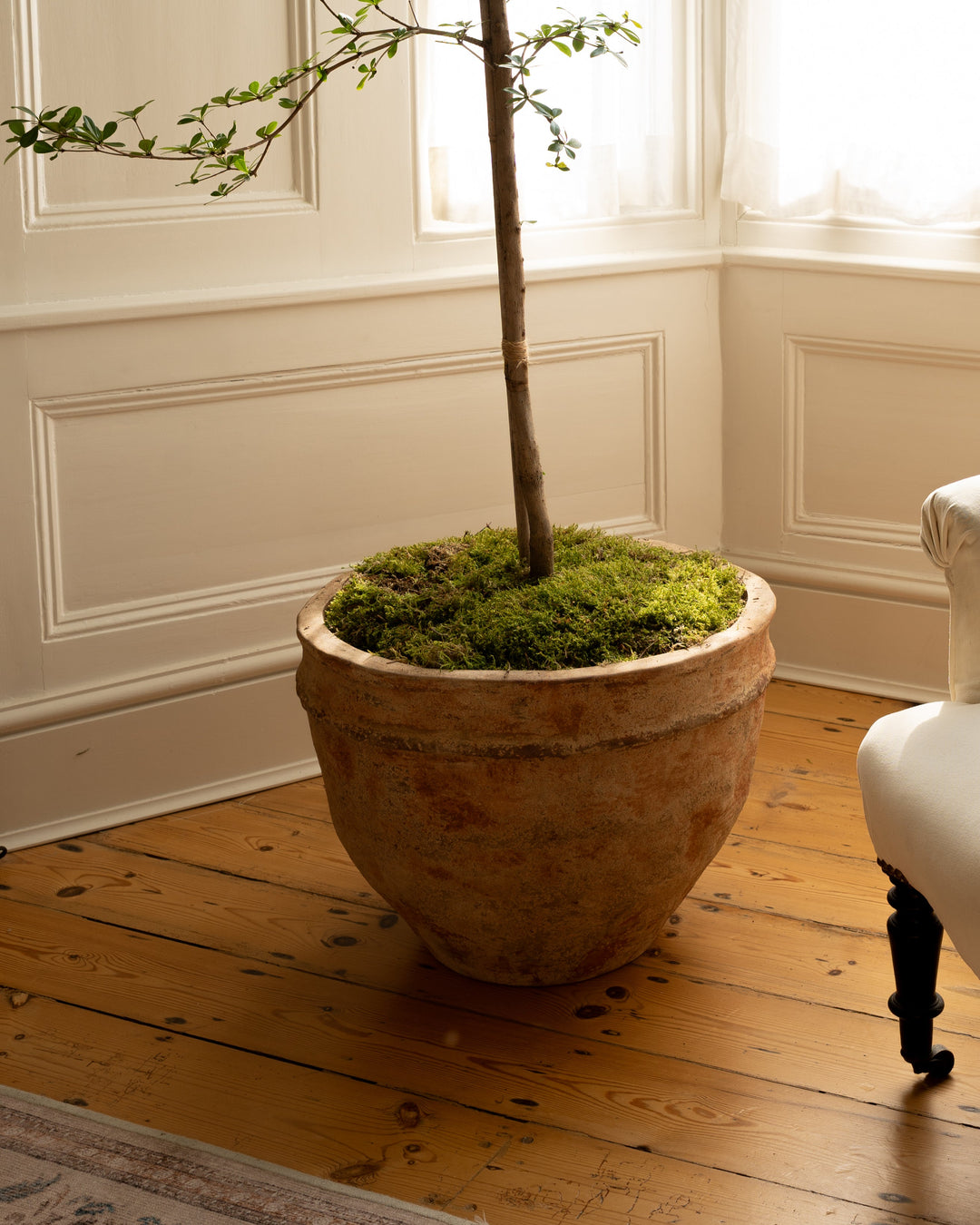
Almost anywhere — yew is one of the most tolerant evergreens there is. Sun or shade, exposed or sheltered, it holds its colour and density. Sculpted pieces look their best flanking a doorway or gate in pairs, or as a single full stop at the end of a path. In containers, give it the largest pot you can — stability and root room — with free-draining, loam-based compost.
How do I water a yew in a pot?
The one thing yew will not forgive is sitting in water — soggy roots are the only common way to kill one. Ensure the pot drains freely, water when the top few centimetres dry out, and be especially attentive in the first summer while it establishes. Once settled, container yew needs surprisingly little: a deep drink in dry spells and an annual spring feed.
When and how do I trim a spiral?
Once or twice a year — late spring and, if you like it crisp, again in early autumn. Follow the existing line of the spiral with sharp shears, little and often, rather than cutting deep. Yew regenerates even from old wood, so an over-enthusiastic trim is never fatal — it just takes a season to soften. Ten minutes twice a year keeps a professionally-trained shape sharp for decades.
Why did topiary balls get so cheap — and spirals didn't?
A ball can be clipped from a young plant in a season or two, so supermarkets sell them by the pallet. A spiral or cone is trained over many years by hand — it can't be rushed or mass-produced, which is why a good one holds its value and its presence. If you want topiary that reads as sculpture rather than filler, buy the shape that took the time.
Is yew safe around pets and children?
All parts of yew are toxic if eaten, so site it where pets and small children won't graze — as hedging and doorway topiary generally is. Handled normally, it's no trouble at all.
Anything else?
Yellowing needles almost always mean wet feet — check the drainage before anything else. And in pots, yew appreciates a top-dress of fresh compost each spring; it's a small ritual that keeps a long-lived plant in its prime.