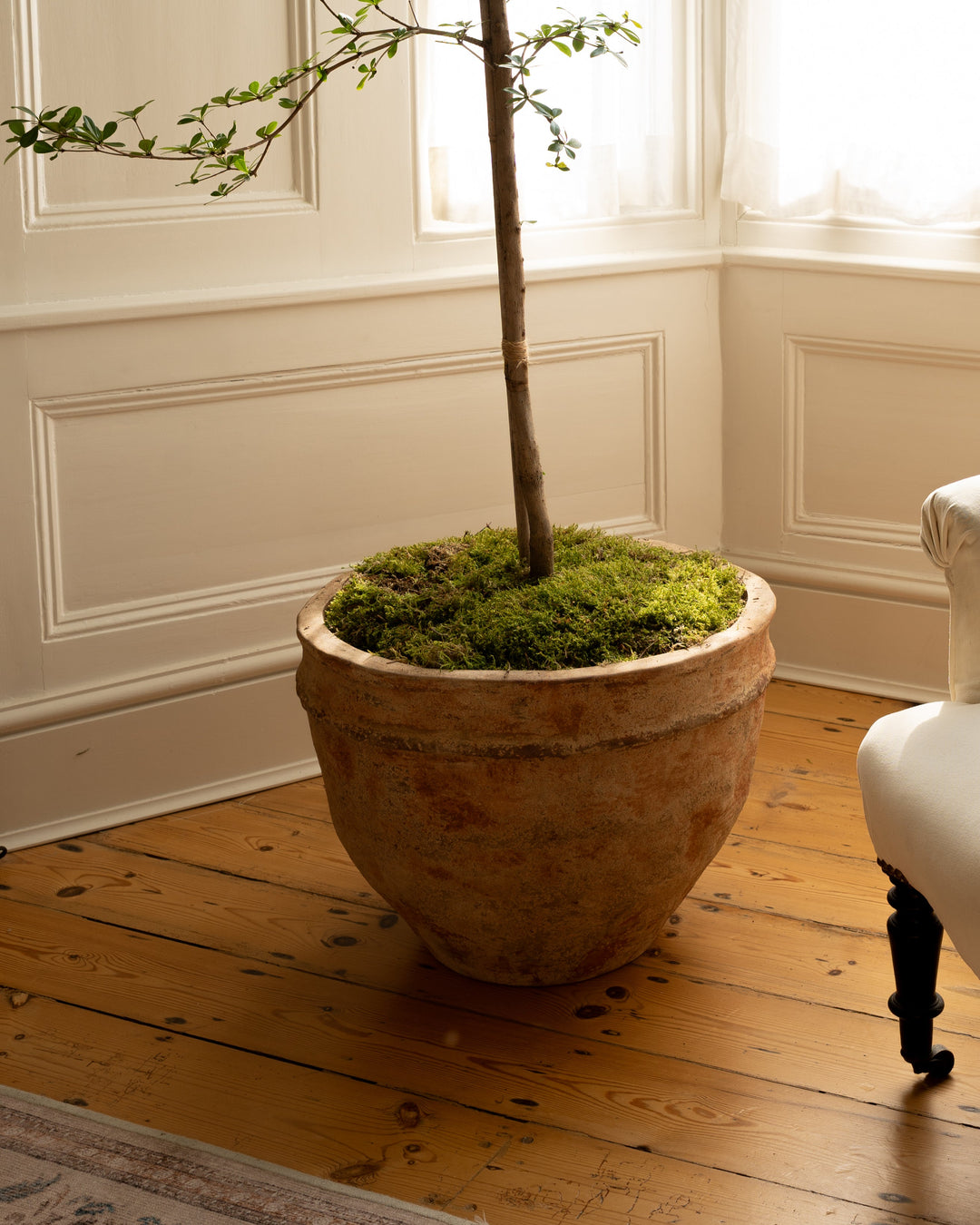
A large pot is the most powerful move in outdoor design — and the most commonly wasted one. Filled with a single specimen tree, a big container turns a terrace, doorway or courtyard into something composed; filled with an apologetic collection of bedding, it's an expensive planter of missed opportunity. Here's what actually belongs in a big pot.
What trees grow well in large pots?
More than most people expect — a large container is effectively a small, well-drained garden. Olive trees are the classic for good reason: drought-tolerant, evergreen and happier in a pot than in cold wet ground. Bay makes formal, clippable structure for entrances. For something more dramatic, Yucca rostrata gives a sculptural, silver-blue presence that shrugs off heat, wind and neglect. The rule: one tree per pot, planted with conviction — not a tree plus a skirt of trailing extras.
How big should the pot be?
Bigger than instinct says. For a tree of 1.5–2m, think a pot of at least 50–60cm diameter — large volumes hold moisture and temperature steadily, which is precisely why big pots are easier to keep alive than small ones. Proportion-wise, the pot wants to be roughly a third of the total height of pot-plus-plant. Pairs flanking a door or gate read as architecture; a single large pot anchors the corner of a terrace.
Do outdoor pots need drainage holes and liners?
Yes, always — winter wet kills more potted plants in Britain than winter cold. Every outdoor pot needs a drainage hole, a layer of crocks or hydro granules at the base, and feet to lift it off the ground so water actually escapes. If you're using a decorative pot without a hole, use a liner with drainage inside it rather than planting direct. (Our pot use guides cover the details.)
What compost should you use in large containers?
A loam-based compost (John Innes No. 3 or similar) rather than multi-purpose — it holds nutrients and moisture for years rather than months, and its weight keeps a tall tree stable in wind. Top-dress annually: scrape away the top few centimetres in spring and replace with fresh compost and a slow-release feed. A mulch of gravel or bark on the surface slows evaporation through hot spells — increasingly worth doing in a London summer.
How do you water trees in pots?
Deeply and rarely beats little and often — soak until water runs from the base, then leave it until the top few centimetres are dry. Mediterranean species — olives, yuccas, lavender — will forgive a fortnight's absence in a big pot; thirstier choices like hydrangeas will not, which is worth knowing before you book an August holiday. If your summers keep trending hotter, plant accordingly: our low-water collection exists for exactly this reason.
Can big pots stay out all winter?
The plants above can — olives, bay and yucca are hardy in London in a pot. The pot matters more than the plant: choose frost-resistant materials, keep drainage sharp so compost never sits waterlogged, and in a hard freeze wrap the pot (not the plant) with hessian to protect the roots. If in doubt about a specific pairing of plant and pot, ask us — advice is part of what you buy.